A grill that performs well in a private backyard is not automatically suitable for an apartment complex, hotel, condominium, clubhouse, short-term rental, or other shared outdoor space. Commercial and multi-user installations create different demands on the appliance, gas supply, controls, warranty, cleaning plan, security features, and surrounding outdoor kitchen.
A premium residential grill may be physically capable of frequent use while still carrying warranty restrictions for commercial or multi-user properties. Other grills are designed specifically for resorts, apartments, condominiums, and shared amenities, with simpler controls, permanent mounting options, anti-theft components, or commercial-use warranty terms.
This SpotixPro guide explains how builders, contractors, developers, property managers, and designers can compare outdoor grills for commercial and multi-user projects. It also highlights several built-in, freestanding, patio-base, post-mounted, and flat-top cooking options for different project types.
SpotixPro Quick Answer: Select a commercial outdoor grill based on the property type, expected peak use, cooking area, burner configuration, gas demand, installation style, control requirements, warranty terms, cleaning access, replacement-part availability, and long-term maintenance plan. Confirm that the manufacturer permits the intended commercial or multi-user application before ordering the appliance.
Commercial Outdoor Grill Planning Checklist
Review the complete project before selecting a grill based only on brand, width, or price.
- Identify the property type.
- Determine whether the installation is residential, hospitality, institutional, rental, or public use.
- Estimate the expected number of users.
- Estimate peak simultaneous cooking demand.
- Determine whether the project needs one grill or multiple stations.
- Compare primary cooking-grid area.
- Compare warming-rack capacity.
- Review burner count and cooking-zone flexibility.
- Confirm total BTU input.
- Select natural gas, propane, electric, or dual-fuel equipment.
- Verify gas-line, meter, and regulator capacity.
- Select a built-in, freestanding, pedestal, patio-base, or post-mount configuration.
- Confirm that the exact model is approved for the intended commercial or multi-user use.
- Review commercial-use warranty terms.
- Determine whether a timer or automatic shutoff is required.
- Review emergency-shutoff requirements.
- Identify anti-theft or tamper-resistant needs.
- Confirm ignition and electrical requirements.
- Plan grease-tray and firebox cleaning access.
- Confirm replacement-part availability.
- Review island ventilation and combustible-clearance requirements.
- Plan access to gas shutoffs, regulators, valves, igniters, and burners.
- Review accessible-use requirements.
- Account for wind, rain, snow, salt air, and other environmental exposure.
- Determine who will inspect, clean, and maintain the grill.
- Plan property-manager training and user signage.
What Makes an Outdoor Grill Suitable for Commercial Use?
The term “commercial grill” can refer to several different product categories. Some appliances are designed specifically for multi-user properties. Others are premium residential grills that may be considered for hospitality, rental, or shared-amenity projects when the manufacturer approves the intended use.
A commercial-ready outdoor grill should be evaluated for:
- Manufacturer approval for the intended property type
- Warranty coverage for commercial or multi-user operation
- Durable firebox and exterior construction
- Replaceable burners, valves, igniters, cooking grids, and internal components
- Simple controls that are easy for unfamiliar users to operate
- Cooking-grid durability
- Anti-theft or tamper-resistant components when needed
- Timer or automatic-shutoff compatibility
- Accessible grease-management components
- Service access
- Replacement-part availability
- Appropriate cooking capacity
- Installation flexibility
- Fuel and utility compatibility
Commercial-Use Warning: Heavy-duty construction does not automatically establish commercial approval. A grill may be durable enough for frequent use while still carrying warranty exclusions for hotels, rentals, apartments, condominiums, or other shared properties.
Verify Commercial-Use Warranty Coverage
Warranty terms should be reviewed for the exact grill model, not only the manufacturer or product series. Commercial eligibility can vary between products from the same brand.
Before ordering, confirm:
- Whether multi-user installations are permitted
- Whether apartments and condominiums are treated as commercial properties
- Whether hotels, resorts, and hospitality projects are covered
- Whether short-term rental use affects the warranty
- Whether specific components receive reduced commercial coverage
- Whether labor is included
- Whether professional installation is required
- Whether maintenance records are required
- Whether coastal or high-corrosion environments affect coverage
- Whether accessories, carts, pedestals, or posts have separate warranty terms
When possible, obtain model-specific confirmation for the proposed project and retain it with the project documentation.
How Much Cooking Capacity Does a Commercial Grill Need?
Cooking capacity should be based on expected peak use, not only total property occupancy. A large apartment community may need several grilling stations to reduce wait times, while a smaller hotel or clubhouse may be adequately served by one well-positioned grill.
Consider:
- Number of residences, guest rooms, or amenity users
- Expected simultaneous cooks
- Peak evening and weekend demand
- Seasonal use
- Available space around each station
- Primary cooking-grid area
- Warming-rack capacity
- Number of independently controlled burners
- Need for separate direct and indirect cooking zones
- Whether a griddle would better support the intended menu
- Availability of a second grill during cleaning or repair
One very large grill is not always the best solution. Multiple smaller or medium-sized grills can reduce queues, support separate groups, and preserve some cooking capacity when one unit is being cleaned or serviced.
One Large Grill or Multiple Smaller Grills?
| Approach | Advantages | Planning Considerations |
|---|---|---|
| One Large Grill | Creates one central amenity and may simplify utility routing. | Users may need to share the cooking surface, and the entire amenity may be unavailable during service. |
| Multiple Smaller Grills | Reduces queues, creates separate cooking zones, and provides backup capacity. | Requires additional gas capacity, shutoffs, ventilation, counter space, and maintenance. |
| Grill and Griddle Combination | Supports a wider range of foods and cooking styles. | Requires separate cleaning procedures, utilities, and user instructions. |
Compare Commercial Grill Installation Configurations
| Configuration | Best Application | Advantages | Main Planning Requirement |
|---|---|---|---|
| Built-In | Custom amenity patios, outdoor kitchens, hotels, and clubhouses | Integrated appearance and flexible storage or counter design | Exact cutout, ventilation, insulated-jacket, gas, electrical, and service planning |
| Freestanding | Hospitality, event, and rental properties needing installation flexibility | Can simplify replacement and may include storage or prep space | Must be secured, positioned safely, and protected from unauthorized movement |
| Patio Base or Pedestal | Apartment patios, HOA common areas, pool decks, and compact amenity spaces | Smaller footprint without requiring a full outdoor kitchen island | Base stability, gas routing, side clearances, security, and service access |
| Bolt-Down Post | Permanent shared-use patios, parks, condominiums, and pool areas | Permanent placement with fewer movable components | Concrete footing, anchor placement, underground utilities, and service clearance |
| In-Ground Post | Permanent amenity areas and high-use shared spaces | Secure installation with a compact footprint | Post depth, footing, frost conditions, utility routing, and future removal |
| Commercial-Style Griddle | Hospitality, event spaces, amenity kitchens, and professional cooks | Supports breakfast, burgers, seafood, vegetables, tacos, and other flat-top cooking | Grease management, cleaning procedures, fuel requirements, and user training |
Confirm Gas Capacity Before Selecting the Grill
The gas system must support the grill and every other connected appliance that may operate at the same time. Commercial amenity areas may include several grills, fire pits, patio heaters, fireplaces, pizza ovens, or other gas equipment.
Confirm:
- Total grill input
- Side-burner or rear-burner input
- Number of grill stations
- Simultaneous operating demand
- Gas-line length
- Pipe diameter
- Available pressure
- Meter capacity
- Regulator requirements
- Fuel type
- Other connected appliances
- Individual shutoff-valve locations
An undersized gas system can cause weak flames, slow preheating, poor temperature recovery, uneven performance, and unreliable ignition.
Gas Planning Warning: Size the gas system for the combined operating load, not one grill at a time. Test multiple appliances simultaneously during commissioning.
BTU Output Does Not Tell the Entire Story
Higher BTU output does not automatically mean better commercial performance. Real-world cooking results also depend on:
- Burner design
- Heat distribution
- Cooking-grid material
- Firebox construction
- Lid design
- Wind exposure
- Preheat and recovery time
- Grease buildup
- Burner condition
- Maintenance frequency
Compare the complete cooking system rather than selecting a grill based on the largest BTU number.
Consider Timers and Automatic Shutoffs
Shared-use properties have a greater risk of grills being left operating after users leave the area. Depending on the property, grill controls may need to be combined with timers, automatic shutoffs, emergency controls, or access restrictions.
Consider:
- Mechanical dial timers
- Automatic gas shutoff valves
- Emergency-stop controls
- Keyed or access-controlled operation
- Property operating hours
- Control labeling
- Reset procedures
- User signage
- Inspection requirements
- Local code and authority requirements
Confirm that the timer or shutoff system is compatible with the selected grill, fuel system, and project requirements.
Anti-Theft and Tamper-Resistant Features
Removable components can be lost or taken from unattended shared areas. Purpose-built multi-user grills may include secured components or simplified designs that reduce this risk.
Depending on the property, consider:
- Secured cooking grids
- Tamper-resistant control knobs
- Secured warming racks
- Locked access doors
- Protected shutoff valves
- Tamper-resistant fasteners
- Permanent mounting
- Restricted access to regulators and electrical components
Plan for Cleaning and Grease Management
The best commercial grill is not only durable. It must also be practical for maintenance personnel to clean, inspect, and repair.
Review:
- Drip-tray removal
- Grease-cup access
- Firebox cleaning access
- Cooking-grid removal
- Burner removal
- Igniter and valve access
- Replacement grease trays or liners
- Required cleaning frequency
- Responsibility for routine inspection
- Seasonal shutdown procedures
Grease buildup can affect burner performance, ignition, airflow, and fire safety. The property should establish a written cleaning and inspection schedule before opening the amenity to users.
Commercial Grill Comparison
The products below represent different installation styles, project budgets, cooking methods, and shared-use applications. Commercial approval and warranty coverage should be confirmed for the exact model and property before ordering.
| Best For | Product | Configuration | Cooking Style | Commercial-Use Note |
|---|---|---|---|---|
| Purpose-Built Multi-User Projects | Fire Magic Choice Multi-User | Built-In | Traditional Gas Grilling | Designed for shared-use property applications |
| Standardized Multi-Station Projects | Napoleon Prestige 500 | Built-In | Traditional Gas Grilling | Verify commercial eligibility for the exact application |
| Value-Focused Built-In Projects | Blaze Prelude | Built-In | Traditional Gas Grilling | Verify model-specific commercial coverage |
| Builder and Development Projects | Summerset Builder Series | Built-In | Traditional Gas Grilling | Builder branding does not automatically establish commercial approval |
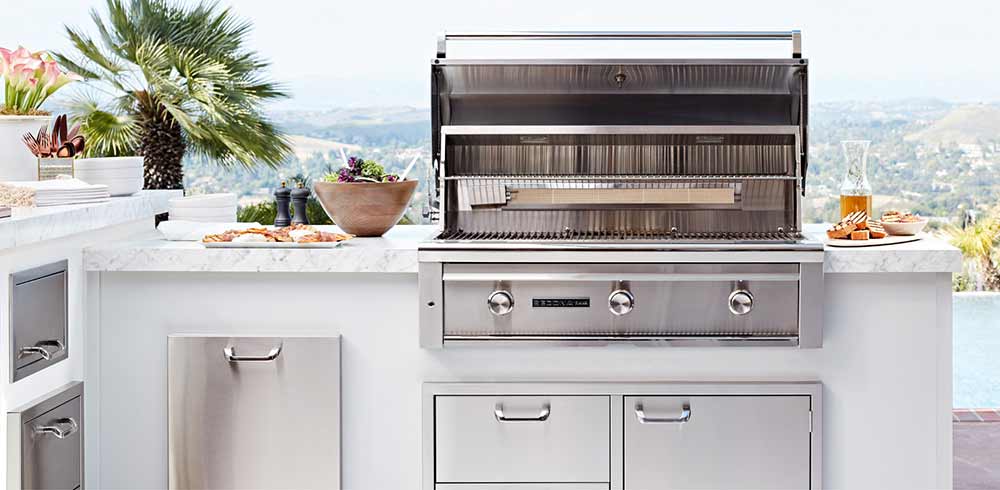
| Premium Hospitality Projects | Sedona by Lynx L600 | Built-In | Premium Gas Grilling | Confirm warranty eligibility for hospitality or shared use |
| Premium Value Built-In Projects | TrueFlame TFE Series | Built-In | Traditional Gas Grilling | Verify approval for the intended multi-user property |
| Compact Shared-Amenity Spaces | Modern Home Products WRG4DD | Patio Base | Infrared Gas Grilling | Confirm property-specific warranty terms |
| Permanent Post-Mount Installations | Solaire Deluxe Grill | Bolt-Down Post | Infrared Gas Grilling | Confirm approval and installation requirements |
| Professional Flat-Top Cooking | Le Griddle Grand Texan | Freestanding | Dual-Fuel Flat-Top Griddling | Evaluate for the intended professional or commercial cooking program |

Best Purpose-Built Multi-User Grill: Fire Magic Choice Multi-User
Best for: Apartment complexes, condominiums, hotels, resorts, clubhouses, and heavily used shared amenity areas.
The Fire Magic Choice Multi-User line is designed specifically for properties where many unfamiliar users may operate the same appliance.
Depending on the selected model, multi-user features may include secured cooking grids, control knobs, and warming racks. The straightforward burner arrangement can also make operation and routine maintenance easier than a grill with several specialty cooking systems.
Before ordering, confirm:
- Exact cooking-grid capacity
- Fuel configuration
- Built-in cutout requirements
- Commercial warranty terms
- Anti-theft component configuration
- Timer or shutoff compatibility
- Gas supply requirements

Best for Standardized Multi-Station Projects: Napoleon Prestige 500
Best for: Projects that may benefit from several standardized built-in grilling stations at a moderate premium price point.
Napoleon offers a broad range of grill sizes and configurations. Using the same grill model across several amenity areas can simplify project drawings, replacement-part planning, operating instructions, and maintenance training.
Because the Prestige 500 is not being presented here as a purpose-built multi-user appliance, confirm the exact warranty treatment for apartments, hotels, condominiums, rental properties, or other commercial applications before specification.

Best Value-Focused Built-In: Blaze Prelude
Best for: Budget-conscious developments and approved multi-user projects that need a straightforward built-in grill.
The Blaze Prelude Series offers a conventional built-in grilling layout without relying on numerous specialty features. This may appeal to builders seeking a cleaner project budget and a familiar operating experience.
Confirm commercial-use eligibility, component coverage, cooking capacity, gas requirements, and replacement-part availability for the exact model.

Best Builder-Focused Option: Summerset Builder Series
Best for: Residential developments, outdoor kitchen packages, and budget-managed projects where the exact application is approved.
The Summerset Builder Series is positioned for project-based outdoor kitchen installations. It can provide builders with a coordinated built-in appearance while leaving room in the budget for access doors, storage, refrigeration, counters, and other amenity components.
The term “Builder Series” does not automatically mean the grill is approved for commercial or shared use. Verify warranty terms and application eligibility for the proposed property.

Best Premium Hospitality Option: Sedona by Lynx L600
Best for: Premium hospitality, luxury development, and high-end amenity projects where finish quality is a major design priority.
Sedona by Lynx offers coordinated outdoor kitchen products with a polished stainless-steel appearance. This can make the L600 a strong design candidate for hotels, resorts, clubhouses, and upscale residential developments.
Premium construction does not automatically establish commercial warranty coverage. Confirm that the exact property type and expected use are permitted before specification.
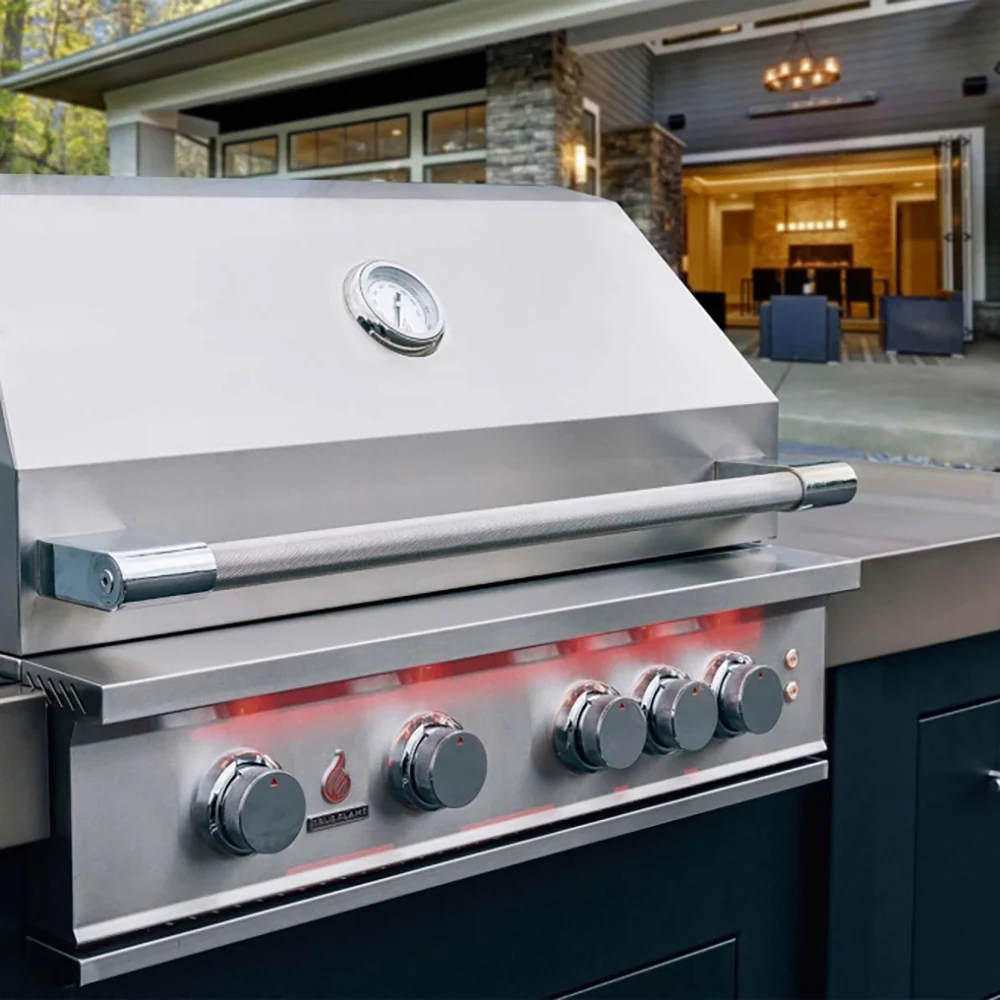
Best Premium Value Built-In: TrueFlame TFE Series
Best for: Modern amenity kitchens, residential developments, and approved multi-user projects needing a premium built-in appearance at a more accessible project tier.
The TrueFlame TF Series Built-In Gas Grill adds another built-in option for projects where stainless-steel construction, contemporary styling, and a traditional multi-burner layout are priorities.
This model can help bridge the space between entry-level builder products and higher-cost hospitality appliances. Before including it in a shared-use project, verify:
- Commercial or multi-user warranty eligibility
- Primary cooking capacity
- Total gas input
- Electrical or ignition requirements
- Cutout dimensions
- Required island ventilation
- Replacement-part availability
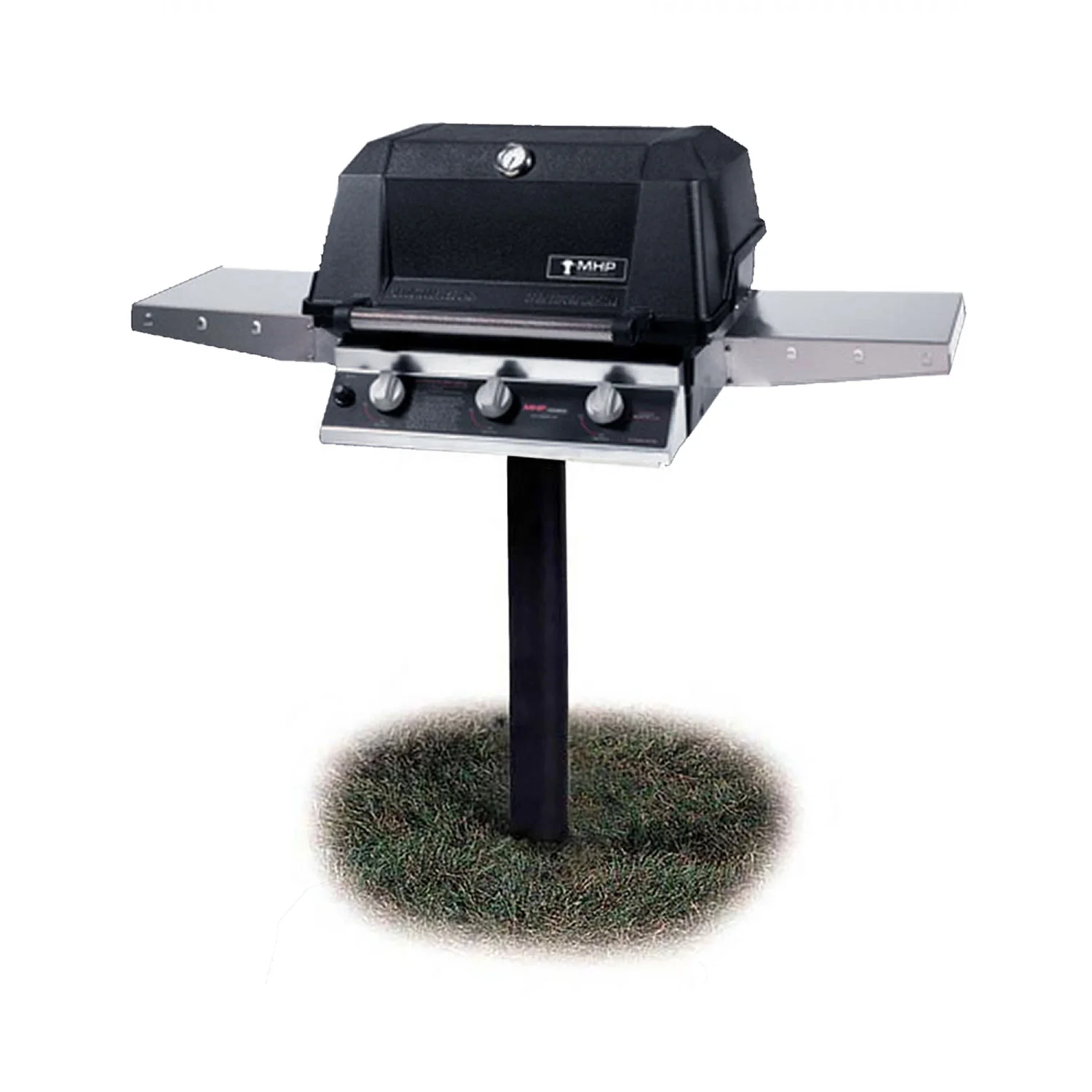
Best Patio-Base Grill for Shared Amenities: Modern Home Products WRG4DD
Best for: Apartment courtyards, condominium common areas, pool decks, patios, and properties that need a fixed cooking station without constructing a full island.
The Modern Home Products WRG4DD combines an all-infrared grill with a patio-base configuration. This creates a compact cooking station that can fit spaces where a built-in outdoor kitchen would consume too much room or add unnecessary construction cost.
The infrared burner system is designed for fast heat generation and high-temperature cooking. The patio base and available side shelves create a self-contained station for shared amenity areas.
Confirm:
- Base configuration and stability
- Natural gas or propane setup
- Required clearances
- Gas-hose or hard-pipe routing
- Security against movement or tampering
- Infrared cooking instructions for users
- Commercial warranty eligibility
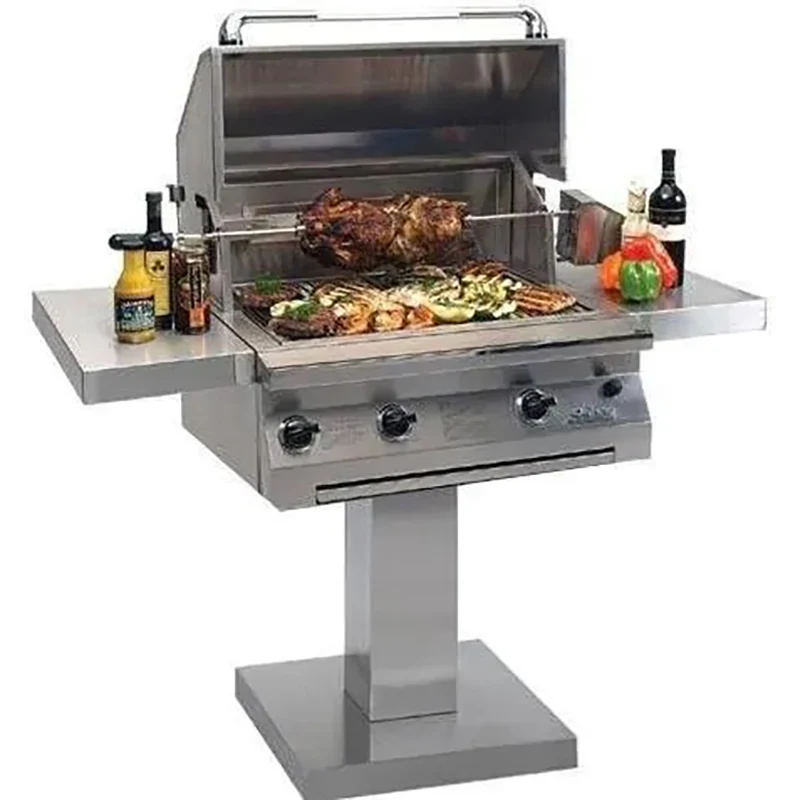
Best Permanent Post-Mount Grill: Solaire Deluxe
Best for: Pool decks, parks, apartment patios, condominium amenities, and compact shared spaces needing a permanent grill location.
The Solaire Deluxe Grill on a Bolt-Down Post offers a permanent alternative to a freestanding cart or full masonry island. The bolt-down installation can help prevent unauthorized movement while preserving more open floor area around the grill.
The infrared cooking system can provide fast preheating and high-temperature searing. The included rotisserie configuration may be attractive for hospitality or supervised amenity settings, although more complex accessories can also increase training and maintenance needs.
Coordinate:
- Concrete pad and anchor layout
- Post position
- Underground gas routing
- Side and rear clearances
- Prevailing wind
- User circulation
- Service access
- Commercial-use approval
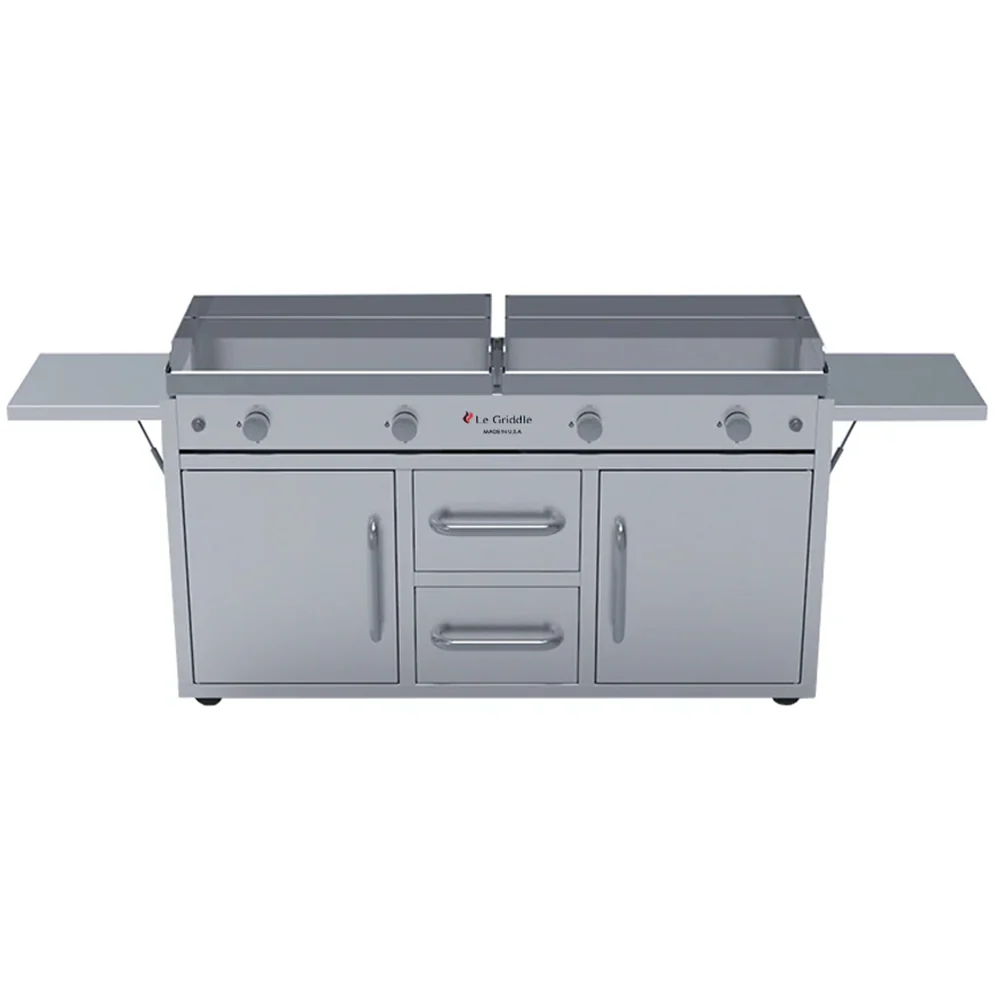
Best Commercial-Style Griddle: Le Griddle Grand Texan
Best for: Hospitality properties, event areas, amenity kitchens, demonstration cooking, professional cooks, and projects needing more menu flexibility than a traditional grill provides.
The Le Griddle Grand Texan Freestanding Dual-Fuel Gas Griddle expands the cooking program beyond traditional grilling. A flat-top surface can support foods such as:
- Breakfast items
- Smash burgers
- Cheesesteaks
- Tacos and fajitas
- Seafood
- Vegetables
- Hibachi-style meals
- Event and demonstration cooking
A griddle may be especially useful where trained staff, professional cooks, caterers, or organized events will use the amenity. It may be less appropriate for an unsupervised property unless users are provided with clear operating and cleaning instructions.
Before specification, review:
- Fuel requirements
- Dual-fuel configuration
- Grease collection
- Cleaning procedures
- Cooking-surface maintenance
- Required user training
- Shutdown procedures
- Commercial warranty terms
- Whether the property has staff available for cleaning and inspection
Commercial Outdoor Kitchen Installation Requirements
The grill must be coordinated with the complete outdoor cooking environment.
Review:
- Manufacturer clearances
- Combustible and noncombustible construction
- Insulated-jacket requirements
- Island ventilation
- Gas shutoff location
- Electrical service
- Task lighting
- Drainage
- Grease-tray clearance
- Access doors and service panels
- Trash and recycling placement
- Fire-extinguisher placement
- Overhead roofs, pergolas, and structures
- Prevailing wind
- User circulation
- Counter landing space
- Accessible approach and operation
- Signage
- A clear path for appliance removal and replacement
Never permanently trap a built-in grill inside an island. The contractor should be able to access connections and remove the appliance without demolishing counters, stone, or cabinetry.
Accessibility Planning
Apartment, condominium, hotel, public, and institutional projects may need to account for accessible-use requirements.
Coordinate with the project architect, designer, and applicable authority regarding:
- Approach path
- Clear floor space
- Counter height
- Control reach
- Side-shelf placement
- Operating force
- Knee and toe clearance where applicable
- Accessible grill or pedestal configurations
Do not rely on a standard grill installation detail for every shared-use property. Accessibility obligations depend on the project type and applicable requirements.
Plan for Weather and Environmental Exposure
Commercial grills may be installed on exposed rooftops, hotel pool decks, coastal properties, uncovered apartment patios, or in freeze-thaw climates.
Consider:
- Stainless-steel grade and finish
- Salt-air exposure
- Wind protection
- Roof and gutter runoff
- Drainage around the appliance
- Snow storage
- Freeze protection
- Seasonal gas shutoff
- Protective covers
- Cleaning frequency
- Corrosion inspection
Stainless steel is corrosion resistant, not corrosion proof. Coastal and high-exposure properties generally require more frequent cleaning and inspection.
Common Commercial Outdoor Grill Specification Mistakes
Assuming a Premium Residential Grill Has Commercial Coverage
High build quality does not guarantee that the manufacturer permits commercial or multi-user use.
Choosing by Brand Instead of Exact Model
Commercial eligibility, construction, controls, and warranty coverage can vary within one manufacturer’s product line.
Undersizing Peak Cooking Capacity
Total property occupancy is less useful than the number of users expected to cook at the same time.
Installing One Grill Where Multiple Stations Are Needed
Multiple units may reduce queues and preserve cooking capacity during cleaning or service.
Ignoring Combined Gas Demand
The gas system must support every grill and other connected appliance that may operate simultaneously.
Skipping Timed Shutoff Controls
Shared-use grills are more likely to be left operating after the user leaves.
Failing to Secure Removable Components
Cooking grids, control knobs, warming racks, covers, and accessories can disappear from unattended amenity spaces.
Building an Island Without Service Access
Valves, regulators, igniters, grease trays, burners, and utility connections must remain accessible.
Ignoring Grease-Cleaning Responsibility
The property should identify who will clean and inspect the appliance and how often the work will occur.
Choosing Too Many Specialty Features
Rotisseries, infrared side burners, electronics, and specialty accessories can add maintenance without improving the core shared-use experience.
Failing to Confirm Replacement-Part Availability
Commercial properties benefit from appliances that can be repaired after routine wear rather than replaced entirely.
Ignoring User Experience
A grill that is difficult to ignite, control, clean, or shut down may create repeated service calls and property-management complaints.
Commercial Grill Commissioning Checklist
Commission every grill station before opening the amenity to residents, guests, or staff.
- Verify the installed model.
- Confirm commercial or multi-user approval documentation.
- Confirm the fuel type.
- Verify gas-line and meter capacity.
- Leak test every connection.
- Confirm regulator selection and orientation.
- Test every burner.
- Verify ignition reliability.
- Inspect flame appearance.
- Confirm even heat distribution.
- Test rear burners, side burners, or rotisserie components when included.
- Test timers and automatic shutoffs.
- Test emergency controls.
- Confirm control labeling.
- Inspect island ventilation.
- Verify clearances.
- Confirm grease-tray removal.
- Test multiple grills simultaneously.
- Operate other connected gas appliances to identify pressure loss.
- Verify that removable components are secured as planned.
- Record model and serial numbers.
- Photograph utility connections and service access.
- Provide warranty documents.
- Provide operating manuals.
- Create a cleaning and inspection schedule.
- Train property maintenance staff.
- Post operating and emergency instructions.
Commercial Outdoor Grill FAQs
What makes an outdoor grill commercial grade?
A commercial-ready grill should be approved for the intended property type and evaluated for warranty coverage, construction, serviceability, controls, capacity, grease management, replacement parts, and maintenance needs. Grills built for shared or high-traffic use are typically constructed with heavier-gauge materials to withstand more frequent operation. Confirming commercial approval upfront helps avoid warranty issues down the line.
Can a residential grill be used at an apartment complex?
Possibly, but the manufacturer must permit the exact use. Do not assume that a premium residential warranty covers an apartment, condominium, hotel, rental, or other shared property. Using a grill outside its approved application can void coverage and create liability concerns for the property.
What is a multi-user grill?
A multi-user grill is designed for properties where many unrelated users operate the same appliance. It may include simpler controls, secured components, permanent mounting, and warranty terms tailored to shared-use applications. These features help reduce wear and misuse in high-traffic amenity settings.
What size grill is best for a condominium association?
The correct size depends on peak simultaneous use, available space, cooking-grid area, number of stations, maintenance plan, and gas capacity. Several medium-sized grills may be more practical than one large appliance, especially for properties with staggered usage times. Evaluating resident demand during peak hours can help guide the right configuration.
Is one large grill or two smaller grills better?
Two smaller grills can reduce waiting and preserve backup capacity, while one large grill may simplify utility routing and create a central amenity. The best option depends on peak use and available space. Backup capacity is especially valuable for properties that can't afford downtime if one unit needs service.
How many BTUs does a commercial outdoor grill need?
There is no universal requirement. Compare cooking area, burner design, heat distribution, recovery time, wind exposure, and gas-system capacity rather than selecting by total BTUs alone. Focusing solely on BTU count without these other factors can lead to uneven cooking performance.
Should a commercial grill have a timer?
A timer or automatic shutoff can be valuable in shared-use properties where users may leave the appliance operating. Confirm compatibility and project requirements before selecting a model. This feature can help reduce gas waste and improve safety in unsupervised amenity areas.
Are anti-theft grill components necessary?
They may be useful in unattended properties. Cooking grids, knobs, warming racks, covers, and accessories can be lost or removed from shared amenity spaces. Securing these components can reduce replacement costs and keep the grill fully functional for all users.
Are built-in or post-mount grills better for apartments?
Built-in grills provide an integrated outdoor kitchen, while post-mount and patio-base grills use less space and may simplify construction. The choice depends on the site plan, budget, utilities, and desired amenities. Properties with limited space or budget often lean toward post-mount options for their simpler installation.
Can propane be used for a commercial outdoor grill?
Some grills are available for propane, but the property must plan tank storage, regulator requirements, security, replacement procedures, and applicable restrictions. Propane can offer flexibility where a natural gas line isn't available, but it requires an ongoing refill or exchange plan. Local code requirements should also be confirmed before finalizing propane storage.
How should a commercial grill gas line be sized?
Size the line using the total connected BTU load, fuel type, run length, available pressure, pipe material, fittings, and simultaneous appliance demand. Undersized lines can lead to pressure drops and inconsistent grill performance. A licensed professional should calculate and verify sizing before installation.
How often should a shared outdoor grill be cleaned?
Cleaning frequency depends on usage, grease production, environment, and manufacturer instructions. High-use properties should establish routine inspections rather than waiting for visible buildup or ignition problems. A consistent cleaning schedule also helps reduce fire risk and extend the appliance's lifespan.
What grill components should remain accessible?
Maintain access to gas shutoffs, regulators, connections, valves, igniters, burners, grease trays, electrical components, and appliance mounting points. Keeping these areas clear supports faster troubleshooting and routine maintenance. Restricted access can delay repairs and increase safety risks during servicing.
Do commercial outdoor grills require special ventilation?
Built-in grills require ventilation and clearance planning based on the manufacturer instructions, fuel type, island construction, and local requirements. Proper ventilation helps prevent heat and gas buildup within the surrounding structure. This should be addressed early in the design phase rather than after construction is complete.
How do I choose a grill for a hotel pool deck?
Consider commercial-use approval, corrosion exposure, wind, guest safety, timed shutoffs, permanent mounting, grease management, maintenance access, and operating signage. Pool decks often involve higher humidity and chlorine exposure, so material corrosion resistance is especially important. Guest safety features, like automatic shutoffs, are also worth prioritizing in high-traffic public settings.
Are accessible commercial grills available?
Accessible grill and mounting configurations are available for some projects. Coordinate the controls, counter, approach, clear floor space, and appliance selection with the project design team. Early coordination helps ensure the final installation meets both accessibility standards and practical usability needs.
Is a griddle appropriate for a commercial outdoor kitchen?
A griddle can be an excellent choice for hospitality, professional cooking, events, and properties with trained maintenance staff. It requires a clear grease-management and cleaning plan. Without proper upkeep, grease buildup can become both a maintenance and fire safety concern.
Choose the Right Grill for the Entire Property
The best commercial outdoor grill is not necessarily the largest, most powerful, or most expensive model. It is the appliance that matches the property’s peak demand, cooking program, utilities, warranty requirements, maintenance capabilities, safety controls, and long-term operating plan.
Confirm the intended application before ordering, size the gas system for simultaneous demand, preserve service access, and give the property team clear cleaning and shutdown procedures.
SpotixPro helps builders, contractors, designers, developers, and property managers compare outdoor grills, griddles, controls, utility components, and outdoor kitchen equipment for residential and commercial projects.
Need Help Selecting a Commercial Grill?
Ready to Compare Outdoor Cooking Equipment?