.jpg)
Fire pit media is more than a decorative finish. The media selected for a gas fire feature can affect flame presentation, ignition performance, service access, maintenance requirements, and the overall appearance of the completed project. Contractors should evaluate media compatibility, quantity, installation depth, fuel type, ignition clearances, environmental exposure, and long-term care before commissioning the fire feature.
This SpotixPro guide explains how to select, specify, install, inspect, troubleshoot, and maintain fire glass, lava rock and decorative stones, gas logs, fire balls, and other approved fire media. It also covers common installation mistakes, media-related callbacks, commercial maintenance considerations, and customer handoff practices.
Always follow the burner, ignition-system, fire-feature, and media manufacturer’s instructions for the specific installation. Requirements vary by burner design, fuel type, ignition system, and application.
Fire Pit Media Selection at a Glance
| Media Type | Design Style | Maintenance | Key Specification Considerations | Common Applications |
|---|---|---|---|---|
| Fire Glass | Modern, colorful, reflective | Low to moderate | Size, depth, pilot clearance, fuel configuration, product density | Modern residential, poolside, hospitality, linear fire features |
| Lava Rock and Stones | Natural, rustic, understated | Moderate | Moisture, approved size, drainage, filler use, outdoor exposure | Landscape fire pits, stone enclosures, rustic installations |
| Gas Logs | Traditional, wood-fire inspired | Low to moderate | Burner compatibility, approved arrangement, flame impingement, outdoor rating | Outdoor fireplaces, traditional fire pits, lodge-style projects |
| Fire Balls | Contemporary, sculptural, architectural | Low to moderate | Approved size, arrangement, burner coverage, ignition clearance | Luxury residential, hospitality, fire bowls, commercial projects |
| Decorative Fire Shapes | Custom and architectural | Varies | Fire rating, direct-flame approval, spacing, support media | Designer and specialty fire features |
What Is Fire Pit Media?
Fire pit media is the heat-resistant decorative material installed over, around, or adjacent to a compatible gas burner. Depending on the project, it may conceal burner components, help establish the finished design, and influence how the flame appears across the fire bed.
Common options include fire glass, lava rock and fire-rated decorative stones, gas logs, fire balls, and other approved ceramic or refractory shapes.
Media should not be selected solely by color or appearance. Contractors should also consider:
- Burner compatibility
- Ignition-system requirements
- Fuel type
- Approved installation depth
- Media size and shape
- Drainage
- Ventilation
- Service accessibility
- Expected maintenance
- Residential or commercial use
- Outdoor exposure
- Replacement availability
What Does Fire Pit Media Do?
Completes the Fire Feature Design
Media helps establish the final style of the project. Reflective fire glass can support a polished contemporary installation, while lava rock or ceramic logs can create a more natural or traditional appearance.
Conceals the Burner and Internal Components
Properly installed media can cover portions of the burner and create a cleaner finished appearance. However, pilots, igniters, flame sensors, drainage openings, ventilation openings, and other required components must remain clear according to the manufacturer’s instructions.
Influences Flame Presentation
The type, size, depth, and placement of media can influence how flames move across the burner and how light reflects through the fire feature.
Media should never be used to compensate for an undersized burner, inadequate gas supply, incorrect operating pressure, or improper burner placement.
Supports the Overall Project Specification
Media contributes to the project’s color palette, texture, architecture, and visual balance. It may also affect installation cost, maintenance, service access, and future replacement needs.
Helps Limit Direct Exposure
Approved media may help reduce direct visual exposure of portions of the burner pan and internal components. It does not replace a compatible cover, proper drainage, ventilation, or routine maintenance.
Use Only Fire-Rated Media
Only media specifically manufactured and approved for gas fire pits or fireplaces should be installed in a fire feature.
Do not substitute:
- Landscape glass
- Aquarium glass
- Ordinary decorative glass
- Unapproved river rocks
- Gravel
- Landscape stones
- Unapproved ceramic pieces
- Painted decorative stones
- Materials with unknown heat ratings
Non-fire-rated materials may crack, pop, discolor, break apart, or release debris when exposed to heat. Porous stones may also retain moisture that can rapidly expand during operation.
Before installation, confirm that the media is approved for the specific burner, fuel type, ignition system, application, direct-flame exposure, and required installation depth.
Types of Fire Pit Media
.jpg)
Fire Glass
Fire glass is heat-resistant glass manufactured for use in compatible gas fire pits and fireplaces. It is available in a wide variety of colors, sizes, shapes, and finishes.
Fire glass is frequently specified for contemporary fire pits, linear fire features, fire bowls, modern outdoor kitchens, poolside installations, hospitality projects, and projects requiring custom color coordination.
Reflective Fire Glass
Reflective fire glass includes a mirrored or reflective surface that catches light from the flames and creates a brighter, more dimensional appearance.
Reflective finishes may show soot, dust, or mineral deposits more clearly than darker non-reflective glass, making routine cleaning more noticeable in high-use applications.
Non-Reflective Fire Glass
Non-reflective fire glass provides a softer finish and may be a better choice where a highly mirrored appearance is not desired.
Crushed Fire Glass
Crushed fire glass typically uses irregular shapes to create a textured fire bed. Contractors should verify the approved particle size and use appropriate protective equipment when handling angular pieces.
Tumbled and Rounded Fire Glass
Tumbled, bead-style, and rounded fire glass can provide a smoother appearance and may be easier to handle during installation and maintenance.
Fire Glass Benefits
- Modern appearance
- Wide selection of colors and finishes
- Reflective visual effects
- Low ash and debris production
- Relatively straightforward cleaning
- Long service life when properly installed
- Useful for custom design coordination
Fire Glass Considerations
- Fire glass generally costs more than basic lava rock.
- Light colors may show soot more readily.
- Incorrect depth can affect ignition and burner operation.
- Small media sizes may not be appropriate for every application.
- Angular pieces may require gloves during handling.
- Media must remain clear of pilot and sensing components as required.
.jpg)
Lava Rock and Decorative Fire Stone
Lava rock is a porous volcanic material commonly used in gas fire features. It creates a natural appearance and is often more budget-friendly than decorative glass or ceramic media.
Lava rock may be appropriate for natural or rustic fire pits, stone enclosures, landscape-integrated projects, budget-conscious installations, and approved filler applications.
Lava Rock Benefits
- Natural texture
- Affordable material cost
- Lightweight installation
- Good fit for rustic designs
- Available in different sizes and colors
- Potential use beneath decorative media when specifically approved
Lava Rock Considerations
- Its porous surface can collect moisture, dust, and debris.
- It may crumble or deteriorate over time.
- It can be more difficult to clean than fire glass.
- Wet rock should be allowed to dry completely before operation.
- Only fire-rated lava rock should be used.
- Filler applications must be approved by the burner manufacturer.
Rolled Lava Stone and Decorative Fire Rock
Rolled lava stone and other fire-rated decorative stones provide a more finished appearance than basic lava rock while retaining a natural design direction.
These products can work well in upscale landscape installations, fire bowls, modern-rustic designs, and projects that call for larger, more visible pieces.
Because larger media can obstruct flame travel or ignition components, follow manufacturer requirements for placement, quantity, and burner coverage.
.jpg)
Gas Log Sets
Gas logs are typically made from ceramic, refractory, or other approved heat-resistant materials designed to resemble natural wood.
Gas logs are commonly specified for outdoor fireplaces, traditional fire pits, rustic patios, and fire features designed to recreate the appearance of a wood fire.
Gas Log Benefits
- Traditional appearance
- No wood ash or flying embers
- Long-lasting heat-resistant materials
- Strong visual focal point
- Available in styles that imitate oak, birch, driftwood, and other woods
Gas Log Considerations
- Logs must be compatible with the burner.
- The placement pattern may be manufacturer-specific.
- Incorrect placement can contribute to soot or flame impingement.
- Ceramic and refractory materials can chip or crack during handling.
- Logs should not be casually rearranged after commissioning.
- Not every outdoor log set is approved for every fire pit or fireplace.
.jpg)
Fire Balls
Fire balls are decorative ceramic or refractory spheres used to create a contemporary architectural look.
They are frequently specified for linear fire pits, modern outdoor fireplaces, luxury hospitality projects, custom fire bowls, and commercial gathering spaces.
Fire balls are available in different diameters, colors, and finishes. Contractors may use a uniform size for a clean layout or combine approved sizes for additional depth and texture.
Because fire balls occupy more physical space than crushed media, placement must preserve the required ignition path, burner access, airflow, and component clearances.
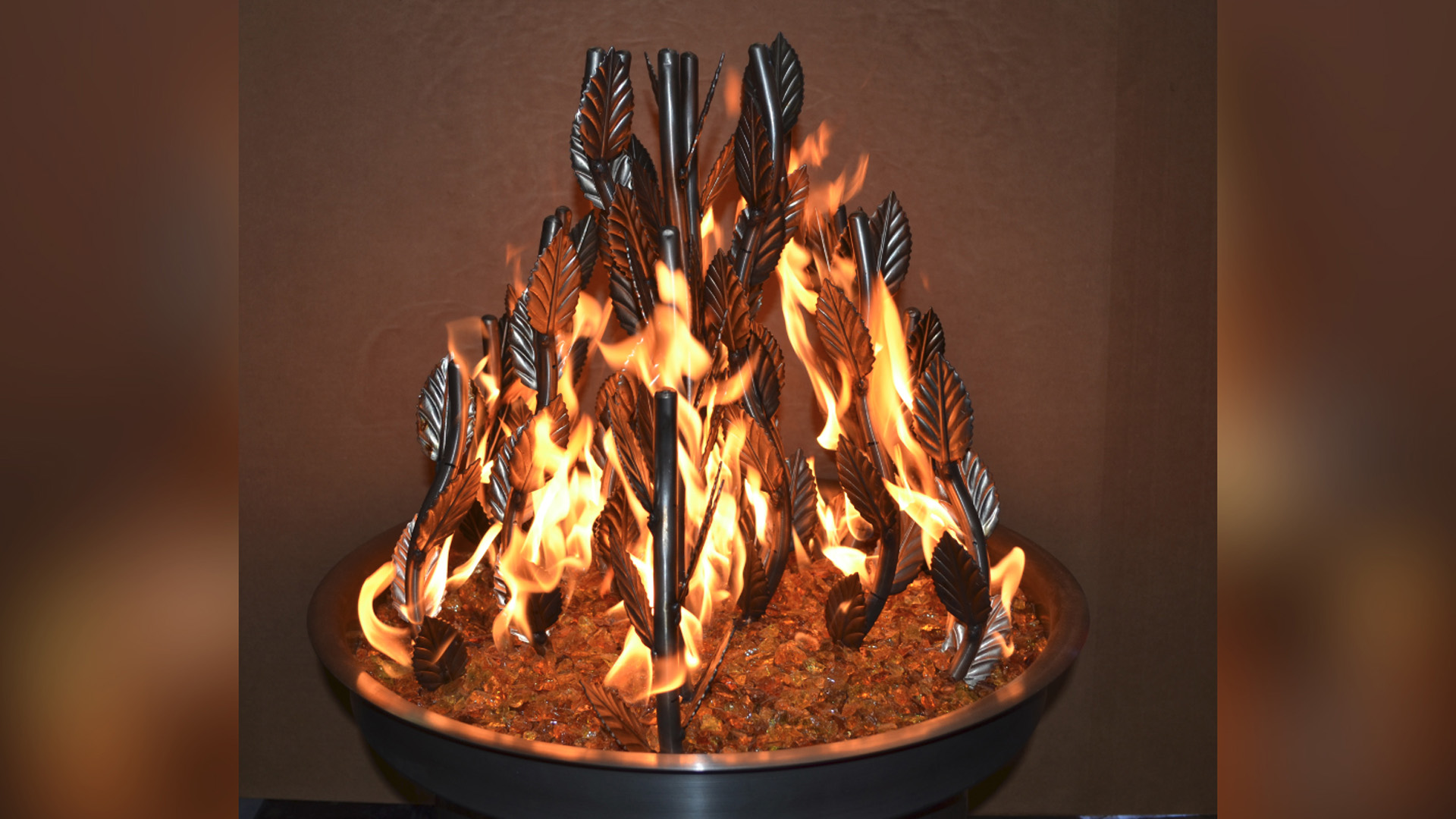
Decorative Fire Shapes
Other approved media may include ceramic cubes, stones, beads, geometric forms, and specialty decorative shapes.
Before specifying these products, confirm:
- Fire rating
- Burner compatibility
- Fuel compatibility
- Approved spacing
- Required support media
- Ignition-component clearances
- Whether direct flame contact is permitted
How Contractors Should Select Fire Pit Media
The most reliable specification process starts with the fire feature and ends with the aesthetic selection.
- Confirm the burner or kit first. The selected burner or gas fire pit kit determines the approved media categories and installation limits.
- Review manufacturer requirements. Confirm approved media size, depth, placement, and ignition clearances.
- Confirm the fuel type. Natural gas and propane configurations may have different burner and media requirements.
- Determine required quantity. Calculate enough media to achieve the approved depth without overfilling the burner area.
- Narrow the design options. Once technically compatible media has been identified, select colors, finishes, and styles that fit the project.
- Consider environmental exposure. Account for drainage, moisture, freezing temperatures, wind, debris, irrigation, salt air, and maintenance.
- Confirm service access. Pilots, sensors, valves, drainage, and other serviceable components should remain accessible as required.
- Verify the complete specification before ordering. Confirm dimensions, media quantity, installation requirements, and replacement availability.
Matching Fire Media to the Project Design
| Project Style | Media Direction |
|---|---|
| Contemporary | Reflective fire glass, uniform fire balls, monochromatic media |
| Traditional | Realistic gas logs |
| Rustic or Natural | Lava rock, fire-rated stone media, weathered log sets |
| Poolside or Resort | Fire glass, fire balls, smooth stone-style media |
| Minimalist | Single-color fire glass or uniform fire balls |
These are design directions rather than technical requirements. Burner compatibility and manufacturer instructions should always be confirmed before the final media selection is approved.
.jpg)
Additional Fire Media Specification Factors
Burner Type
The burner manufacturer may specify approved media categories, sizes, and installation depths. Burner port design, pan shape, and ignition location can affect which media is appropriate.
Ignition System
Electronic ignition systems may include pilot assemblies, igniters, thermocouples, flame sensors, and other components that require specific clearances.
Match-light and push-button systems may also have designated media-placement requirements around the ignition area.
Fuel Type
Natural gas and propane systems may have different airflow, ventilation, and media requirements. Contractors should follow the requirements for the exact fuel configuration rather than assuming one media arrangement applies to both.
Residential vs. Commercial Use
Commercial fire features may benefit from media that is easier to inspect, clean, replace, and document because of longer operating hours and greater exposure to guests and debris.
Weather Exposure
Consider rain, snow, freezing temperatures, irrigation, wind, salt air, tree debris, dust, and pool chemicals when selecting media for outdoor projects.
Maintenance Expectations
Discuss with the customer or facility manager how often the fire feature will be inspected and who will be responsible for ongoing maintenance.
Replacement Availability
For large or highly customized installations, consider ordering additional media from the same production run where practical. Colors, finishes, and sizes may vary between future orders.
Fire Media Specification Checklist
Before ordering media, confirm:
- Fire feature manufacturer and model
- Burner manufacturer and model
- Ignition-system type
- Natural gas or propane
- Approved media category
- Approved media size
- Required media depth
- Burner-pan dimensions
- Pilot and sensor clearances
- Whether filler media is permitted
- Indoor or outdoor rating
- Commercial or residential application
- Expected environmental exposure
- Customer or designer selection
- Maintenance responsibility
- Replacement-media availability
Fire Media Compatibility Requirements
Approved Media Type
Follow the burner manufacturer’s instructions regarding fire glass, lava rock, logs, fire balls, or other decorative media.
Approved Media Size
Media that is too small may settle into openings or interfere with burner operation. Oversized media can obstruct flame travel or create unstable placement.
Approved Media Depth
Excessive media depth can bury burner ports, restrict gas movement, delay ignition, trap heat, interfere with sensors, or contribute to soot formation.
Insufficient media may expose components or fail to achieve the intended design.
Pilot and Ignition Clearance
Maintain required clearance around pilot assemblies, hot-surface igniters, electrodes, thermocouples, flame sensors, ignition hoods, and required air openings.
Fuel Compatibility
Media type and placement should not interfere with the burner’s fuel-specific combustion and airflow requirements.
Direct Flame Approval
Some decorative products may be approved for placement around a fire feature without being approved directly over the burner. Confirm whether the selected media is intended for direct flame exposure.
How to Calculate Fire Media Quantity
The amount of media required depends on the media area, installation depth, product density, and burner configuration.
Measure the Media Area
Measure the interior dimensions of the area that will receive media.
For a rectangular area:
Length × Width = Surface Area
For a circular area:
Radius × Radius × 3.14 = Surface Area
For irregular shapes, divide the media area into smaller measurable sections and total the individual areas.
Confirm the Required Depth
Use the depth specified by the burner or fire-feature manufacturer. Do not select depth based only on appearance.
Account for Product Density
Fire glass, lava rock, and ceramic media do not weigh the same per cubic foot. Even different fire-glass sizes and finishes may have different coverage rates.
Use the coverage information provided for the specific media rather than applying one universal pounds-per-square-foot estimate.
Account for Component Displacement
The burner, pilot assembly, and other components occupy volume within the media area. Verify the assumptions used by any product calculator before ordering large quantities.
Using Filler Media
Some systems permit approved lava rock or another material beneath a decorative media layer. This can reduce the amount of premium media required.
Only use filler media when allowed by the burner manufacturer. The filler should not block drainage, obstruct burner ports, bury ignition components, interfere with fuel-specific airflow, or create excessive media depth.
Order Extra Media When Appropriate
For custom projects, a small additional quantity may be useful for future touch-ups, replacement after maintenance, color matching, or media lost during service.
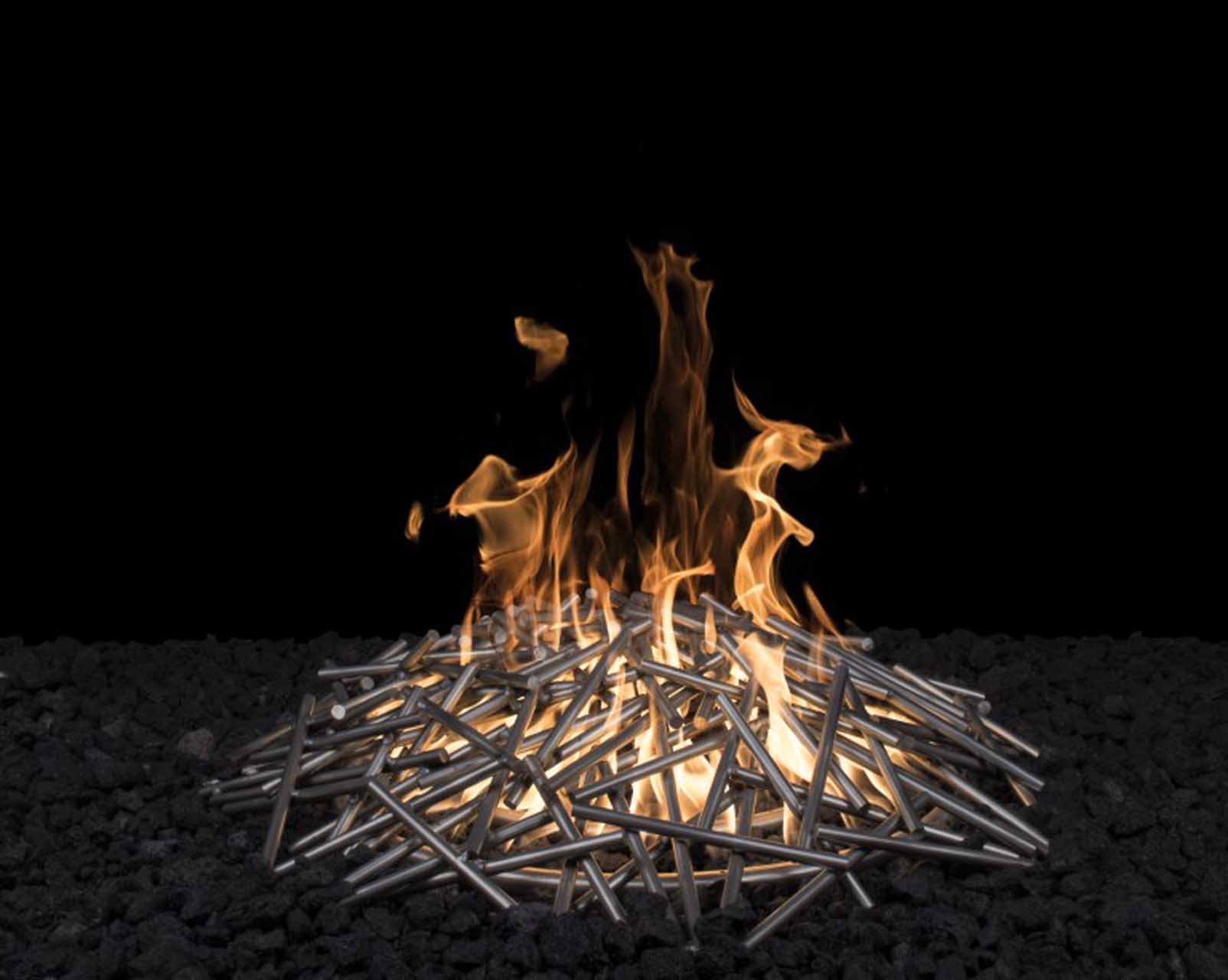
Can You Mix Fire Pit Media?
Some fire features permit approved media types to be layered or combined, while others specify a single media configuration.
Potential combinations may include fire balls over approved lava rock, decorative logs arranged over a compatible burner bed, or fire glass installed above an approved filler layer.
Mixed media should only be used when permitted by the burner manufacturer and should not block burner ports, ignition components, airflow, or drainage.
How to Install Fire Pit Media
Media should be installed only after the burner, gas supply, ignition system, ventilation, and drainage have been reviewed according to the manufacturer’s instructions.
Step 1: Review the Manufacturer’s Instructions
Confirm the approved media type, size, depth, filler requirements, and placement before installation.
Step 2: Inspect the Fire Feature
Verify that the burner is secured, burner ports are unobstructed, the pan is properly positioned, gas and ignition components are complete, drainage and ventilation are available as required, and construction debris has been removed.
Step 3: Test the Burner Before Adding Media
Complete an initial ignition test according to the product documentation before installing the media.
Confirm reliable ignition, stable pilot operation where applicable, main burner ignition, expected flame pattern, and proper shutdown.
This provides a useful baseline if performance changes after media is installed.
Step 4: Install Approved Filler Media
If filler media is permitted, install it evenly without covering required openings or ignition components.
Step 5: Add Decorative Media Gradually
Add media in manageable quantities and distribute it evenly. Avoid dumping heavy media directly onto burners, pilots, wiring, or ignition components.
Step 6: Maintain Ignition Clearances
Keep the pilot, igniter, flame sensor, thermocouple, and surrounding openings clear according to the manufacturer’s installation diagram.
Step 7: Inspect Burner Ports
Do not force media into burner ports or tightly pack areas that require open gas movement.
Step 8: Confirm Media Depth
Check the installed depth at multiple points and correct uneven areas without exceeding the manufacturer’s specified limit.
Step 9: Photograph the Final Layout
Document the finished media arrangement before operation. These photos can help if the media is later moved by the owner, maintenance staff, landscaper, or another trade.
Step 10: Recommission the Fire Feature
Test the system again after media installation. Confirm reliable ignition, proper flame travel, flame sensing where applicable, acceptable flame presentation, unobstructed burner operation, and correct shutdown.
Fire Media Installation Inspection Checklist
- Media is listed or approved for fire-feature use.
- Media is compatible with the burner.
- Media is compatible with the fuel type.
- Media size meets manufacturer requirements.
- Installed depth is correct.
- Burner ports remain unobstructed.
- Pilot assembly remains clear.
- Igniter remains clear.
- Flame sensor or thermocouple remains clear.
- Required air openings remain open.
- Drainage remains unobstructed.
- Enclosure ventilation remains unobstructed.
- The burner was tested before media installation.
- The burner was tested after media installation.
- Ignition is reliable.
- Flame presentation is acceptable.
- The final layout has been photographed.
- Product type and quantity have been documented.
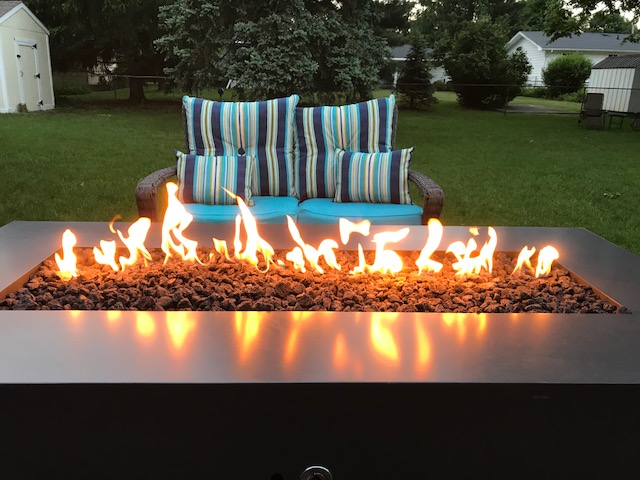
How Fire Media Affects Flame Performance
Media can influence flame appearance, but contractors should evaluate the complete gas system when diagnosing poor performance.
Flame presentation may be affected by burner design, burner size, gas supply, fuel type, burner-pan design, media depth, media size, media placement, wind, and ignition-component placement.
Uneven Flames
Possible causes include an uneven media bed, blocked burner ports, water accumulation, burner-pan positioning, wind, or other system conditions.
Low Flame Height
Low flames should not automatically be attributed to media. Excessive media depth or obstruction may contribute, but contractors should also evaluate the complete fuel and burner system according to the manufacturer’s documentation.
Delayed Ignition
Delayed ignition may occur when media blocks the required path between the ignition source and main burner or restricts gas movement around burner ports.
Stop operating the system until delayed ignition has been diagnosed and corrected.
Flame Loss After Ignition
If the burner shuts down after ignition, inspect whether media has moved into the pilot, flame-sensing, or ignition area before proceeding with broader system diagnosis.
Common Contractor Callbacks Related to Fire Media
| Customer Complaint | Possible Media-Related Cause | What to Inspect | Corrective Direction |
|---|---|---|---|
| Fire Pit Will Not Light | Pilot or igniter covered by media | Pilot opening, igniter, media depth, sensing area | Restore the approved media layout and recommission the ignition system. |
| Burner Lights Slowly | Media obstructing flame travel | Burner ports, pilot location, media depth | Correct media placement and continue diagnosis according to the manufacturer’s procedures. |
| Fire Pit Shuts Off | Media interfering with flame sensing | Pilot flame, thermocouple, flame sensor, media placement | Restore required clearances and test the complete ignition sequence. |
| Fire Glass Turns Black | Soot caused by combustion or media-placement issue | Fuel configuration, ventilation, burner ports, media depth, flame impingement | Correct the underlying cause before cleaning or replacing the media. |
| Media Pops | Moisture or unapproved material | Media condition, drainage, product rating | Dry approved media completely and replace unapproved or damaged material. |
| Flame Pattern Is Uneven | Uneven media or blocked burner ports | Media distribution, burner ports, water accumulation, pan position | Restore the approved media arrangement and correct any underlying installation issue. |
| Media Keeps Shifting | Wind, water flow, handling, incorrect base layer | Wind exposure, drainage direction, filler configuration | Correct site conditions and reinstall according to manufacturer guidance. |
| Media Cracks or Crumbles | Age, moisture, impact, or unapproved material | Media rating, condition, exposure | Replace damaged or unapproved media. |
Why Fire Glass Turns Black
Black fire glass is generally the result of soot accumulation. Cleaning may restore the appearance, but recurring soot can indicate a combustion or installation issue.
Potential causes include incorrect fuel configuration, insufficient combustion air, excessive media depth, blocked burner openings, incorrect decorative-media placement, flame impingement, or other conditions affecting combustion.
Before cleaning or replacing repeatedly sooted media, identify and correct the underlying cause.
How to Clean Fire Glass
Fire glass can often be cleaned with warm water, mild dish soap, and a soft brush when permitted by the media and fire-feature manufacturer.
- Shut off gas and power. Follow the manufacturer’s shutdown and service procedures.
- Allow the fire feature to cool completely.
- Photograph the media layout. Document the pilot area, burner coverage, and overall arrangement.
- Remove the media carefully. Avoid striking the burner, igniter, pilot, or sensor.
- Inspect the burner area. Check for debris, water, blocked ports, corrosion, damaged components, and drainage issues.
- Wash the fire glass. Use mild soap, warm water, and a soft brush where approved.
- Rinse thoroughly.
- Dry completely. Do not reinstall damp media.
- Reinstall to the approved depth. Restore all required ignition clearances.
- Recommission the fire feature. Test ignition, flame travel, sensing, and shutdown.
How to Clean Lava Rock
Lava rock is porous and should be handled differently from fire glass.
- Shut off the system and allow it to cool.
- Remove loose leaves and debris.
- Remove rock carefully where required for maintenance.
- Rinse only when permitted.
- Avoid prolonged soaking.
- Allow the rock to dry completely.
- Inspect for crumbling, cracking, and contamination.
- Replace deteriorated rock rather than aggressively cleaning it.
How to Clean Fire Balls and Ceramic Media
Fire balls and decorative ceramic media should be cleaned according to the manufacturer’s instructions.
General care may include allowing the media to cool completely, photographing the original arrangement, removing pieces individually, using a soft brush or damp cloth, avoiding abrasive cleaners, inspecting for cracks or finish damage, and drying everything completely before reinstallation.
How to Clean Gas Log Sets
Gas logs are often made from ceramic or refractory materials that can chip or crack if handled improperly.
- Shut off gas and power as required.
- Allow the logs to cool completely.
- Photograph the approved placement pattern.
- Remove logs only when permitted.
- Use a soft brush or dry cloth to remove dust and soot.
- Avoid soaking unless specifically approved.
- Do not use harsh chemical cleaners.
- Inspect for cracks, chips, or heavy soot.
- Return each log to its approved position.
- Recommission the burner before returning it to service.
Recurring soot on gas logs may indicate improper placement, flame impingement, ventilation problems, or another combustion issue.
Fire Media Maintenance Schedule
Before Regular Use
- Inspect for leaves and debris.
- Confirm the media is dry.
- Check for visible media movement.
- Verify the ignition area remains clear.
- Confirm drainage openings remain unobstructed.
During the Operating Season
- Inspect the flame pattern periodically.
- Look for soot or discoloration.
- Watch for delayed ignition.
- Remove surface debris.
- Inspect media depth near the burner.
- Confirm no unapproved material has been added.
Seasonally
- Remove and clean media as needed.
- Inspect burner ports.
- Inspect pilot and ignition components.
- Clear drainage openings.
- Inspect for corrosion.
- Replace damaged or deteriorated media.
- Test the complete ignition sequence.
Annually
- Complete professional inspection as appropriate for the system.
- Verify media compatibility and depth.
- Inspect gas and ignition systems.
- Review ventilation and drainage.
- Document media condition.
- Replace media that no longer meets project requirements.
Actual maintenance frequency should follow the manufacturer’s requirements and may need to be increased for high-use, commercial, or harsh-environment installations.
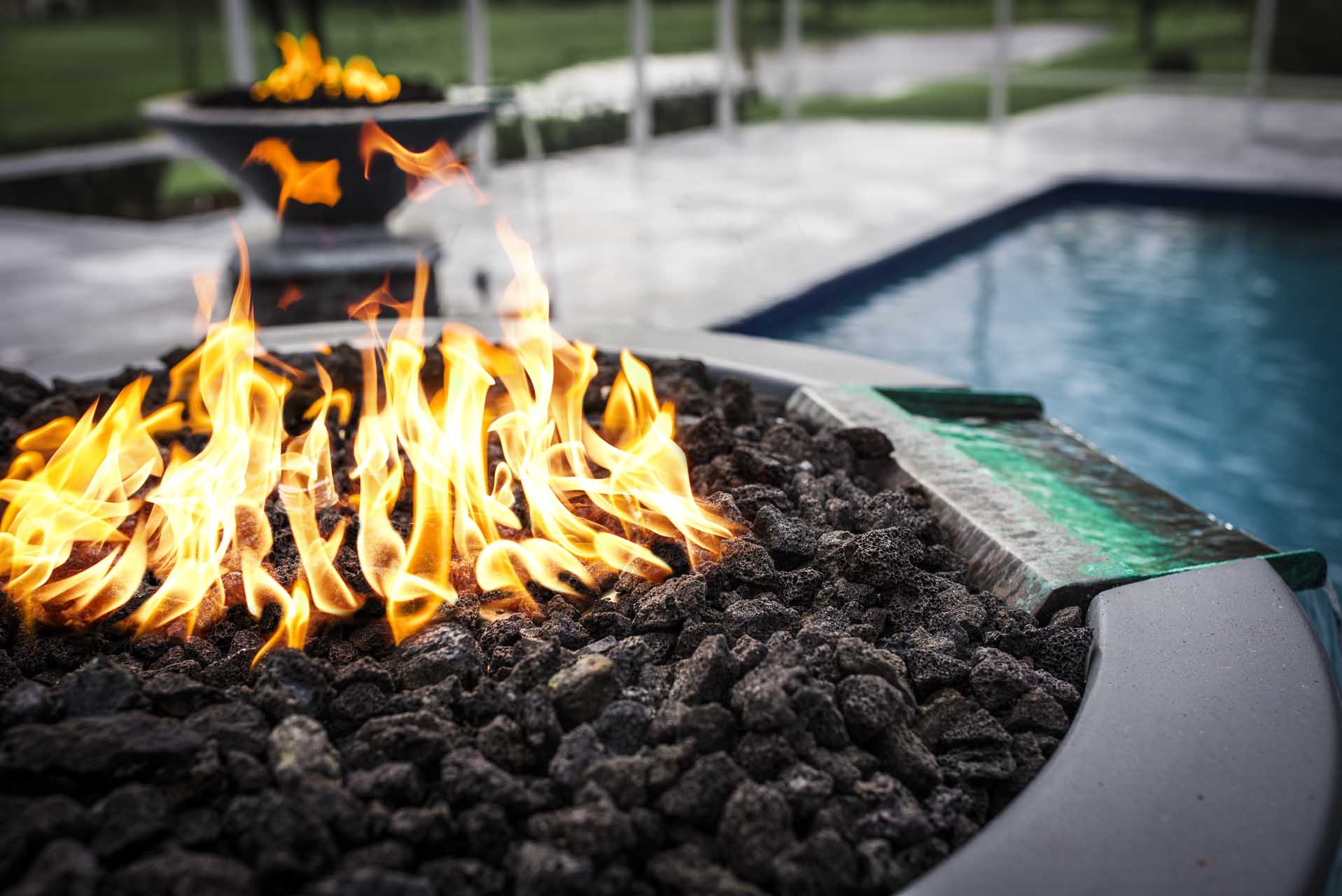
When Fire Media Should Be Replaced
Properly installed fire media can provide years of service, but all media should be inspected periodically.
Replacement may be appropriate when media is cracked, chipped, crumbled, permanently discolored, heavily sooted, chemically contaminated, mixed with unapproved materials, damaged by moisture or freezing, missing after repeated maintenance, incorrect for the burner or fuel type, or interfering with reliable ignition.
Gas logs, fire balls, and ceramic shapes should also be replaced when significant cracks, broken sections, or finish damage prevent proper placement or continued use according to the manufacturer.
Commercial Fire Media Considerations
Commercial fire features generally require more frequent inspection and documentation than residential systems.
Common applications include restaurants, hotels, resorts, multifamily developments, HOA common areas, golf courses, rooftop patios, event venues, and corporate outdoor spaces.
Higher Operating Hours
Long operating periods can increase visible soot, heat exposure, and component wear.
Greater Debris Exposure
Food, drinks, napkins, landscaping debris, and other contaminants may enter an unattended commercial fire feature.
Guest Interaction
Guests may move media, add foreign materials, or place objects in the fire feature. Staff should inspect the installation before operation.
Documented Maintenance
Commercial operators may benefit from documenting inspection dates, cleaning dates, media condition, ignition testing, observed soot, repairs, replacement materials, and the staff responsible for inspection.
The inspection schedule should follow manufacturer requirements and may need to be more frequent based on usage and environmental exposure.
Common Fire Media Installation Mistakes
- Using non-fire-rated glass or stone
- Installing the wrong media size
- Adding excessive media
- Burying the pilot assembly
- Covering the igniter
- Blocking the flame sensor
- Packing media into burner ports
- Ignoring fuel-specific media requirements
- Using filler media without approval
- Blocking drainage openings
- Installing wet media
- Mixing unknown media products
- Using decorative landscaping materials
- Failing to test the burner before adding media
- Failing to recommission after media installation
- Using media to conceal an improperly selected burner
- Rearranging manufacturer-specific gas logs
- Failing to document the final layout
- Not ordering extra custom media where future matching may be difficult
- Allowing other trades to add or move media after commissioning
.jpg)
Fire Media Commissioning Checklist
- Confirm the media is approved for the fire feature.
- Confirm fuel compatibility.
- Confirm media size.
- Document the installed quantity.
- Verify media depth.
- Inspect burner ports.
- Verify pilot clearance.
- Verify igniter clearance.
- Verify flame-sensor clearance.
- Confirm drainage.
- Confirm ventilation.
- Cycle the system according to manufacturer procedures.
- Inspect flame travel.
- Inspect the final flame pattern.
- Check for delayed ignition.
- Check for abnormal soot.
- Test shutdown.
- Photograph the completed layout.
- Provide customer maintenance instructions.
Customer Handoff and Callback Prevention
Before completing the project, review the fire media requirements with the customer, property manager, or facility team.
Explain:
- The installed media type
- The approved media depth
- Why ignition and sensing areas must remain clear
- Why media should not be casually rearranged
- Why unapproved decorative glass or stone should not be added
- How to remove surface debris
- How often the media should be inspected
- How outdoor exposure affects maintenance
- Why wet media should dry before operation when required
- When soot warrants further diagnosis
- When damaged media should be replaced
- Who should service the burner and ignition system
Provide the manufacturer’s instructions and retain photos of the original media installation for future service reference.
.jpg)
Helping Clients Choose Fire Pit Media
One of the easiest ways to simplify the selection process is to separate technical decisions from aesthetic decisions.
First, the contractor should narrow the field to media options approved for the burner, fuel, ignition system, and installation. Once compatibility is established, the client or designer can choose among the remaining colors, finishes, and styles.
- Traditional or modern? Logs generally create a traditional appearance, while glass and fire balls lean more contemporary.
- Natural or polished? Lava rock and stone-style media provide a more organic look, while reflective glass creates a more refined finish.
- Subtle or statement-making? Neutral media can blend into the hardscape, while bold glass or sculptural media can become a focal point.
- What complements the architecture? Coordinate the media with masonry, countertops, furniture, pool finishes, and surrounding materials.
This approach keeps technical compatibility with the contractor while still giving the client meaningful design control.
Fire Pit Media FAQs
How Deep Should Fire Glass Be Installed?
Fire glass should be installed at the depth specified by the burner or fire-feature manufacturer. The correct depth varies by burner design, media size, fuel type, and ignition system.
How Much Fire Glass Does a Project Need?
The required amount depends on the media area, approved installation depth, and product density. Measure the media area, confirm the required depth, and use the coverage information for the specific fire-glass product.
Can Fire Glass Cover the Burner?
Many burners are designed to operate with approved media positioned over or around portions of the burner, but coverage requirements vary. Follow the burner manufacturer’s instructions and avoid packing media into burner ports.
Can Fire Glass Cover the Pilot Assembly?
Only when the manufacturer specifically permits that arrangement. Pilot, igniter, thermocouple, and flame-sensing components commonly require designated clearances for reliable operation.
Can Fire Media Cause Ignition Problems?
Yes. Excessive or improperly placed media can cover ignition components, obstruct burner ports, interfere with flame sensing, or contribute to delayed ignition.
Can Fire Glass and Lava Rock Be Mixed?
Some approved installations allow lava rock to be used beneath a decorative fire-glass layer. Only combine media when the burner and media manufacturers permit the configuration.
Can You Put Fire Glass Over Lava Rock?
Yes, in some approved systems. Confirm whether the burner manufacturer permits a filler layer and follow the required depth and placement for both materials.
Can You Use Gas Logs With Any Fire Pit Burner?
No. Gas logs should only be used with burners and fire features approved for that media. Log dimensions, arrangement, burner design, and fuel configuration can all affect compatibility.
What Media Works Best for Propane Fire Pits?
Use media approved for the specific propane burner. The manufacturer may specify particular media sizes, depths, airflow requirements, or placement around ignition components.
Why Is Fire Glass Turning Black?
Black fire glass is usually caused by soot. Possible causes can include fuel configuration, combustion conditions, excessive media, blocked burner ports, flame impingement, or installation issues that should be corrected before repeatedly cleaning the glass.
Can Wet Fire Media Pop?
Moisture trapped in or around some media can rapidly heat during operation. Allow media to dry completely before use when required by the product and fire-feature manufacturer.
Can Regular Glass Be Used in a Fire Pit?
No. Only use glass specifically manufactured and rated for compatible gas fire pits or fireplaces.
Can Regular Rocks Be Used in a Gas Fire Pit?
No. Unapproved landscaping stones and other decorative rocks may retain moisture, crack, or behave unpredictably under high heat. Use media specifically rated for the application.
Can Different Fire Glass Colors Be Combined?
Approved fire-glass colors may often be combined when the products have compatible size, heat rating, and installation requirements. Confirm compatibility before mixing products.
How Often Should Commercial Fire Media Be Inspected?
Inspection frequency depends on the manufacturer, operating hours, environment, and application. Commercial installations generally benefit from frequent visual inspection, routine debris removal, periodic cleaning, and scheduled professional service.
Does Fire Glass Wear Out?
Fire-rated glass does not burn away like wood and may remain usable for many years when installed correctly. Damaged, contaminated, or permanently discolored pieces should be replaced as needed.
Can Improper Media Affect the Product Warranty?
Using unapproved media or installing media contrary to the manufacturer’s instructions may affect warranty eligibility. Review the complete warranty and installation documentation for the specific product.
Final Thoughts
Fire pit media influences far more than the finished appearance of a gas fire feature. Media type, size, quantity, placement, and maintenance can affect ignition, flame presentation, service access, long-term care, and customer satisfaction.
Contractors can reduce media-related callbacks by selecting the burner first, confirming approved media requirements, calculating quantity carefully, testing the system before installation, maintaining ignition clearances, documenting the finished layout, and recommissioning the fire feature after media is installed.
Explore Spotix selections of fire glass, lava rock and stones, fire pit logs, fire balls, and gas fire pit kits and burners when planning your next project.
SpotixPro supports contractors, builders, designers, and other trade professionals with trade-focused project support. If you need help identifying compatible fire media, burners, ignition systems, or related components, contact the Spotix team for assistance.