.webp)
Gas regulator selection should not begin with the regulator itself. For professional fire feature installations, the correct setup depends on the fuel source, available inlet pressure, required appliance pressure, total BTU demand, pipe size, run length, elevation changes, and other appliances connected to the same system.
A regulator that works for one installation may be inappropriate for another, even when the burner or fire feature appears similar. Contractors should evaluate the complete fuel-delivery system before specifying a regulator for a gas fire pit, fireplace, fire bowl, outdoor kitchen appliance, or commercial fire feature.
SpotixPro Quick Answer: A 20 lb. propane cylinder requires a compatible regulator assembly. Natural gas and large propane systems must be evaluated as complete systems because the correct regulation strategy depends on supply pressure, required appliance pressure, BTU demand, line size, distance, and other connected appliances.
Why Regulator Selection Matters on Professional Installations
The purpose of a gas regulator is to control downstream pressure. Selecting the wrong regulator, installing it in the wrong location, or failing to account for the complete gas system can affect both performance and safety.
Regulator-related specification errors may contribute to:
- Low or unstable flame height
- Insufficient gas flow at full burner demand
- High-pitched whistling or vibration
- Delayed ignition or inconsistent operation
- Pressure that exceeds appliance requirements
- Premature component wear
- Unnecessary product returns
- Failed inspections or required rework
- Additional jobsite visits
Before ordering components, contractors should confirm what pressure is available, what pressure the fire feature requires, and whether the existing system can deliver the necessary BTUs under full connected load.
When Does a Gas Fire Feature Need a Regulator?
Before adding a regulator, confirm whether regulation is already built into the fire feature or provided elsewhere in the fuel system. Some fire tables, fire pits, and burner systems incorporate a regulator or other pressure-control components as part of their specified configuration. An additional regulator should not be added automatically simply because the appliance is being connected to a gas supply.
Review the fire feature manufacturer’s documentation and trace the complete fuel path from the source to the burner. The goal is to deliver the pressure and flow required by the approved appliance configuration, not to add the greatest possible number of pressure-control components.
| Fuel Supply | Regulator Consideration | Professional Planning Notes |
|---|---|---|
| 20 lb. propane cylinder | Regulator required | Specify a regulator and hose assembly compatible with the burner system, required pressure, expected BTU demand, and cylinder connection. |
| Large propane tank | Evaluate the complete system | The property may already use first-stage or second-stage regulation. Confirm available pressure and capacity at the fire feature under full appliance load. |
| Natural gas service | Depends on supply conditions | Meter pressure, appliance pressure, run length, gas line size, elevation, and connected demand determine whether additional regulation is needed. |
| Shared appliance branch | Load calculation required | Account for pool heaters, grills, fireplaces, generators, furnaces, and other appliances that may operate at the same time. |
| Elevated-pressure system | Point-of-use regulation may be required | Confirm the pressure reduction strategy, regulator location, capacity, venting requirements, and appliance inlet limits. |
What Contractors Should Verify Before Specifying a Regulator
A regulator should be selected using verified system information rather than assumptions based on burner size alone.
| Specification | What to Confirm | Why It Matters |
|---|---|---|
| Fuel type | Natural gas or propane | Regulators, orifices, valves, and pressure requirements may differ by fuel. |
| Available inlet pressure | Pressure at the regulator location under operating conditions | The regulator must receive sufficient inlet pressure to deliver the required outlet pressure. |
| Required outlet pressure | Manufacturer-specified appliance inlet pressure | Incorrect outlet pressure can cause poor performance or exceed component limits. |
| Maximum BTU demand | Full input rating of the fire feature | The regulator must have enough capacity at the intended inlet and outlet pressures. |
| Total connected load | Combined demand of all appliances sharing the system | A line may perform properly until multiple appliances operate simultaneously. |
| Pipe size and run length | Material, diameter, equivalent length, and fittings | Pressure loss across the piping system can reduce the pressure available at the appliance. |
| Connection sizes | Regulator inlet, outlet, valve, hose, and appliance connections | Matching thread size alone does not confirm pressure or flow compatibility. |
| Installation orientation | Flow direction, mounting position, vent orientation, and weather exposure | Some regulators must be installed in a specific orientation to function properly. |
How a Gas Regulator Works
A gas regulator reduces and controls downstream pressure. A typical regulator includes an inlet, valve mechanism, diaphragm, spring, adjustment mechanism, and outlet.
As downstream demand changes, the diaphragm and internal valve respond to maintain the intended outlet pressure within the regulator's operating range. Adjustable regulators use a spring adjustment to modify the outlet pressure setting.
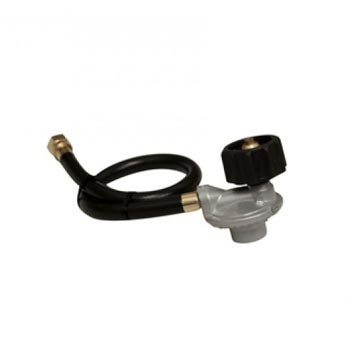
Adjustment should be performed by a qualified gas professional using an appropriate pressure-measuring instrument, such as a manometer. The technician should confirm both static and operating pressure rather than adjusting the regulator based only on flame appearance.
Professional Reminder: Do not adjust a regulator without confirming the manufacturer's operating range, the appliance pressure requirement, and the actual system pressure with a calibrated instrument.
Static Pressure, Operating Pressure, and Pressure Drop
Pressure measurements should be taken under the conditions that matter to the installation.
- Static pressure: Gas pressure measured while the appliance is not operating.
- Operating pressure: Gas pressure measured while the fire feature is running.
- Full-load pressure: Pressure measured while the fire feature and other connected appliances are operating at expected demand.
- Pressure drop: The reduction in pressure caused by pipe length, fittings, elevation, flow demand, and other system resistance.
A system may show acceptable static pressure but drop below the appliance requirement once the burner is operating. For that reason, contractors should avoid diagnosing regulator or supply problems using static pressure alone.
Planning Regulation for 20 lb. Propane Cylinders
A portable 20 lb. propane cylinder requires a regulator assembly between the cylinder and the fire feature. However, not every propane regulator is appropriate for every burner system.
Before specifying a cylinder regulator, verify:
- The maximum BTU input of the burner
- The regulator's BTU capacity
- The required outlet pressure
- Whether the regulator is fixed or adjustable
- The cylinder connection type
- The hose length and internal diameter
- The regulator inlet and outlet connection sizes
- Whether the burner system is approved for portable-cylinder operation
A standard grill regulator should not automatically be substituted for a regulator specified for a fire feature. A regulator that cannot provide the required pressure or flow may produce weak flames or unstable operation.
Portable cylinders also have practical fuel-delivery limitations. Available vaporization capacity can be affected by ambient temperature, cylinder fill level, burner demand, and operating duration. A burner may be theoretically compatible with the cylinder connection but still exceed what the cylinder can reliably supply under actual conditions.
Planning Regulation for Large Propane Systems
Large residential or commercial propane tanks often use staged regulation. The tank system may reduce pressure at one location and regulate it again closer to the building or appliance distribution system.
When adding a fire feature to an existing propane system, confirm:
- The pressure available at the proposed branch connection
- Whether the system uses first-stage and second-stage regulation
- The capacity of the existing regulators
- The total connected BTU load
- The pressure required by the fire feature
- The size and length of the new gas line
- Whether other high-demand appliances operate simultaneously
- Whether additional point-of-use regulation is required
Many fire feature systems are designed to operate at appliance pressures commonly measured in inches of water column. However, the required pressure must be confirmed from the specific burner, valve, ignition system, and manufacturer documentation.
The presence of an existing property regulator does not automatically confirm adequate capacity for the added fire feature.
Planning Regulation for Natural Gas Fire Features
Natural gas service pressure varies by utility, property, meter configuration, and system design. Some properties use lower-pressure distribution throughout the building, while others use elevated pressure with appliance-level or branch-level regulation.
Contractors should verify:
- Utility or meter outlet pressure
- Pressure at the proposed fire feature branch
- Required appliance inlet pressure
- Meter capacity
- Total connected appliance load
- Gas pipe diameter and equivalent run length
- Pressure drop under operating load
- Whether the branch passes through another regulator
- Regulator venting and installation requirements
A fire feature located close to the meter may not require the same regulation strategy as one positioned several hundred feet away or downstream of multiple appliances. The regulator decision should be made from measured conditions and system calculations, not distance alone.
Regulator Capacity Is Not the Same as Connection Size
Matching connections do not mean a regulator matches the burner. Regulator capacity, inlet pressure requirements, outlet pressure, fuel compatibility, and the burner’s maximum input must also be verified.
This is a recurring mismatch our SpotixPro team encounters in support conversations: a regulator is selected that physically connects to the system but does not have sufficient capacity for the burner it is intended to supply. For example, a regulator rated for approximately 90,000 BTUs should not be assumed suitable for a burner with a higher input requirement simply because the connection sizes match.
Contractors should review the regulator’s rated capacity at the intended inlet and outlet pressure conditions and compare those specifications with the requirements of the complete burner system.
Two regulators with identical connection sizes may have significantly different:
- BTU capacities
- Inlet pressure limits
- Outlet pressure ranges
- Adjustment ranges
- Vent configurations
- Installation orientations
- Fuel approvals
- Outdoor-use ratings
Review the complete regulator specification rather than ordering by pipe size alone.
Common Regulator Specification Mistakes
Using a Grill Regulator for a High-Output Fire Feature
Some grill regulators are designed for lower-pressure or lower-flow applications. Using one on a fire feature with higher demand may restrict the fuel supply and reduce flame height.
Sizing Only for the Burner Ring
The regulator must be compatible with the complete burner and control system, including the valve, ignition components, orifices, flex line, and connected piping.
Ignoring Inlet Pressure Requirements
A regulator cannot produce its intended outlet pressure without adequate inlet pressure. Review the required inlet range and expected system pressure under load.
Overlooking Total Connected Load
A branch that performs well when only the fire feature is running may experience pressure loss when a pool heater, grill, fireplace, generator, or other appliance activates.
Selecting by Thread Size Alone
Matching inlet and outlet threads do not confirm capacity, pressure range, fuel compatibility, or installation suitability.
Installing the Regulator Backward
Regulators are designed for a specific direction of flow. Confirm the inlet, outlet, and flow-direction marking before installation.
Incorrect Vent Orientation
Regulator vents may need to be protected from water, debris, insects, and obstruction. Follow the manufacturer requirements for orientation, vent protection, and outdoor installation.
Adjusting Pressure Without a Manometer
Flame appearance alone is not a reliable pressure measurement. Confirm outlet pressure using an appropriate instrument while the system is operating.
Common Regulator and Gas-Supply Symptoms
| Symptom | Potential Causes | What to Verify |
|---|---|---|
| Low flame height | Insufficient pressure, undersized regulator, inadequate gas line, limited cylinder vaporization, or excess connected demand | Operating pressure, regulator capacity, pipe sizing, fuel supply, and appliance input rating |
| Flame drops when another appliance starts | Insufficient meter, regulator, tank, or piping capacity | Full connected load and pressure under simultaneous operation |
| Whistling or humming | High velocity, excessive pressure, regulator vibration, restrictive fittings, or standard corrugated flex line | Pressure, regulator orientation, hose construction, flow direction, and component restrictions |
| Unstable or surging flame | Incorrect regulation, supply fluctuation, improper adjustment, or component mismatch | Static and operating pressure, regulator specification, and valve or ignition requirements |
| Regulator freezing or frosting | High demand, moisture, rapid pressure reduction, cold weather, or insufficient propane vaporization | Fuel supply conditions, regulator capacity, ambient temperature, and demand |
Troubleshooting Low Flame Height
Low flame height should be diagnosed as a system issue rather than immediately blamed on the burner or regulator.
Check the following in order:
- Confirm the fire feature is configured for the correct fuel type.
- Verify the appliance input rating and required inlet pressure.
- Measure pressure while the fire feature is operating.
- Operate other connected appliances and observe pressure changes.
- Confirm regulator capacity and outlet setting.
- Verify pipe size, equivalent run length, and supply capacity.
- Inspect valves, flex lines, fittings, and quick-disconnects for restrictions.
- For portable propane systems, verify cylinder fill level, temperature, and vaporization capacity.
- Confirm the orifice and burner components match the approved configuration.
Do not increase regulator pressure beyond the appliance or component rating in an attempt to compensate for an undersized gas line or insufficient fuel supply.
Troubleshooting Whistling or Regulator Noise
Whistling can originate from a regulator, valve, fitting, or flex line. The sound is often associated with gas velocity, pressure, internal vibration, or resonance within a corrugated hose.
Contractors should verify:
- Regulator inlet and outlet pressure
- Regulator capacity at actual system demand
- Flow direction and installation orientation
- Whether the flex line is designed to reduce whistling
- Whether any valve or fitting creates an unnecessary restriction
- Whether the regulator or hose is contacting the enclosure and transmitting vibration
- Whether the vent is obstructed
- Whether the appliance is operating within manufacturer specifications
A whistle-free flex line may reduce resonance caused by uniform corrugations, but it will not correct excessive pressure, incorrect regulator selection, or an undersized system.
Why Regulators Are Not Included with Every Fire Feature Kit
Many professional burner kits and fire feature systems do not include a universal regulator because the required component depends on the installation.
Variables include:
- Natural gas or propane
- Portable cylinder or permanent fuel supply
- Available inlet pressure
- Required appliance pressure
- Burner BTU rating
- Ignition and valve configuration
- Line size and run length
- Existing property regulation
- Other appliances on the system
- Local code requirements
Including one regulator with every kit could create the impression that the same component is appropriate for every installation. For professional projects, the regulator should be specified after the fuel system has been evaluated.
What Our Support Data Shows About Regulator Selection
SpotixPro Expert Insight: In roughly 75 regulator-related customer and contractor support cases we reviewed, two questions appeared repeatedly: whether the installation needs an additional regulator at all, and whether the selected regulator can support the burner’s pressure and BTU requirements.
One recurring scenario involves fire tables and fire pits that already incorporate regulation as part of the approved system. Contractors and customers may see the existing regulator and still question whether another regulator should be installed upstream. Adding a second regulator without confirming the complete system requirements can create a pressure or flow problem rather than solve one.
The other recurring issue is regulator capacity. We see regulators selected with a BTU capacity below the burner’s required input, including cases where a regulator rated for approximately 90,000 BTUs is paired with a higher-demand burner. Portable propane setups create similar questions because the regulator, burner demand, required pressure, and cylinder supply all have to work together.
The field takeaway: Do not add or select a regulator based on fuel type, connection size, or the presence of a gas line alone. First determine whether regulation is already incorporated into the fire feature or upstream system. Then verify the required inlet and outlet pressure and regulator capacity against the specific burner and manufacturer documentation.
SpotixPro Regulator Specification Checklist
Complete this checklist before ordering a regulator or approving a gas-system design.
- Confirm the fuel type.
- Record the fire feature manufacturer and model.
- Confirm the maximum BTU input.
- Verify the required appliance inlet pressure.
- Measure or confirm the available supply pressure.
- Identify whether pressure values are static or measured under load.
- Calculate the total connected appliance demand.
- Confirm meter or tank capacity.
- Verify gas pipe material, diameter, and equivalent run length.
- Confirm regulator inlet pressure range.
- Confirm regulator outlet pressure range.
- Verify regulator capacity at the intended pressure conditions.
- Confirm fuel approval.
- Verify inlet and outlet thread sizes.
- Confirm the required mounting orientation.
- Review venting and outdoor-installation requirements.
- Confirm the regulator is accessible for inspection and service.
- Verify all valves, flex lines, and fittings are compatible.
- Review manufacturer instructions and local codes.
- Plan pressure and leak testing before commissioning.
Pre-Startup and Commissioning Checklist
Before placing the fire feature into service:
- Confirm all components are installed in the correct flow direction.
- Inspect threaded connections for proper engagement.
- Verify that approved sealant was used only where required.
- Confirm flare, compression, and other non-NPT connections were assembled correctly.
- Verify regulator vent orientation and protection.
- Check that piping weight is not supported by the regulator or appliance inlet.
- Complete required pressure testing.
- Leak test all field-made connections.
- Measure operating pressure at the appliance.
- Confirm pressure while other connected appliances are operating.
- Verify ignition and flame performance through the full control range.
- Document final pressure settings and installed components.
- Provide the property owner or facility manager with operating instructions.
Gas Regulator Terms Contractors Should Know
| Term | Meaning |
|---|---|
| Inlet pressure | The gas pressure entering the regulator. |
| Outlet pressure | The controlled pressure leaving the regulator and supplying the downstream system or appliance. |
| Water column | A pressure measurement commonly used for low-pressure gas systems, typically expressed as inches of water column. |
| BTU capacity | The amount of gas energy a regulator or component can deliver under specified pressure conditions. |
| Static pressure | Pressure measured when no gas is flowing through the appliance. |
| Operating pressure | Pressure measured while the appliance is operating. |
| Pressure drop | The loss of pressure caused by gas flow through piping, fittings, valves, regulators, and other restrictions. |
| First-stage regulator | A regulator that performs the initial pressure reduction in a staged propane system. |
| Second-stage regulator | A regulator that reduces intermediate pressure to the pressure required by the downstream distribution system or appliances. |
| Point-of-use regulator | A regulator installed near an individual appliance or branch to deliver the required operating pressure. |
| Manometer | An instrument used to measure gas pressure. |
Gas Fire Feature Regulator FAQs
Does every gas fire feature require its own regulator?
No. The need for a dedicated regulator depends on the fuel source, existing regulation, available supply pressure, required appliance pressure, and overall system design. A qualified gas professional should evaluate permanent natural gas and large propane systems.
Does a 20 lb. propane cylinder require a regulator?
Yes. A compatible regulator and hose assembly is required between a portable propane cylinder and an approved fire feature system.
Can a grill regulator be used on a fire pit?
Only when the regulator's pressure range, capacity, fuel approval, connections, and manufacturer specifications match the fire feature. Many grill regulators are not designed for the pressure or flow requirements of high-output fire features.
How do I size a regulator by BTUs?
Compare the regulator's capacity with the fire feature's maximum input and the intended inlet and outlet pressure conditions. Include an appropriate design allowance and follow the regulator and appliance manufacturer requirements.
Why does the flame shrink when another appliance turns on?
The meter, tank, regulator, branch line, or piping system may not have enough capacity for the combined load. Measure pressure under simultaneous operation and review the complete connected-load calculation.
Can regulator pressure be adjusted by looking at the flame?
No. Flame appearance may help identify a problem, but pressure should be measured with an appropriate instrument and adjusted only within the approved operating range.
Can increasing regulator pressure fix an undersized gas line?
Not safely. Increasing pressure beyond approved limits does not correct an undersized line and may exceed the ratings of the appliance, valves, ignition components, or other downstream equipment.
What causes a fire feature to whistle?
Potential causes include excessive pressure, high gas velocity, restrictive components, regulator vibration, and resonance within a corrugated flex line. The complete system should be evaluated before replacing individual components.
Why are regulators sold separately from many burner kits?
Regulator requirements vary by fuel type, supply pressure, BTU demand, piping system, ignition configuration, and existing property regulation. A universal regulator would not be appropriate for every installation.
Where should a gas regulator be installed?
Location depends on the regulator design, system pressure, venting requirements, accessibility, weather exposure, and applicable codes. Follow the regulator manufacturer's installation instructions and the approved system design.
Specify the Complete Fuel System, Not Just the Regulator
A regulator cannot compensate for an undersized gas line, inadequate meter capacity, limited propane vaporization, mismatched appliance components, or an incorrect fuel configuration. Professional installations should be designed as complete systems.
Before ordering, document the fuel source, inlet pressure, appliance pressure requirement, BTU demand, total connected load, pipe size, run length, regulator capacity, connection sizes, and installation location. Confirm these specifications again during commissioning under operating load.
Always follow manufacturer instructions, applicable codes, and required testing procedures. Permanent natural gas and large propane installations should be completed by qualified professionals as required by local regulations.
Need Help Reviewing Regulator Compatibility?
SpotixPro product specialists can help review burner, valve, ignition, regulator, flex line, and connection specifications before components are ordered.
Looking for Gas Pressure Regulators?