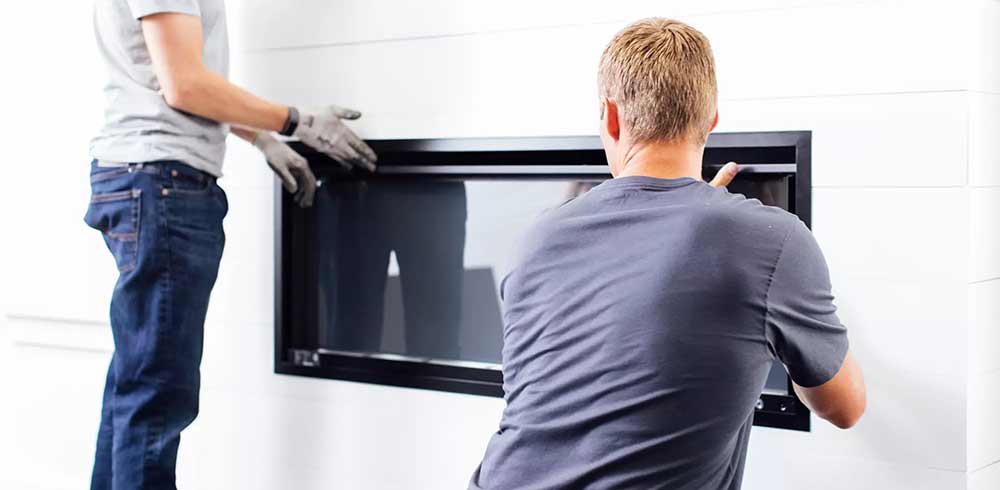
When an electric fireplace does not operate as expected, contractors need a fast, repeatable way to determine whether the problem is related to power, controls, airflow, installation or the fireplace itself. This SpotixPro troubleshooting guide walks builders and installers through common electric fireplace problems, commissioning checks and callback-prevention steps that can help keep projects on schedule.
Electric fireplaces are generally straightforward to install and operate, but problems can still occur during construction, final commissioning or after the customer begins using the unit. A fireplace that appears defective may actually be responding to a blocked vent, incorrect control setting, overloaded circuit, loose connection or installation condition.
Before replacing parts or assuming the unit has failed, confirm the model requirements, inspect the installation and test each function separately.
Always follow the fireplace manufacturer’s installation and service instructions. Disconnect power before inspecting internal components. Hardwired electrical work and circuit modifications should be completed by a qualified electrician in accordance with applicable codes.
Electric Fireplace Troubleshooting Safety
Electric fireplaces combine heating elements, blowers, motors, lighting systems and electronic controls. Contractors should use appropriate electrical safety procedures before inspecting or servicing a unit.
Before troubleshooting:
- Turn off the fireplace.
- Disconnect the plug or shut off power at the breaker.
- Allow the heater and internal components to cool.
- Review the model-specific installation manual.
- Confirm the required voltage and circuit size.
- Do not bypass thermal limits, sensors or safety controls.
- Do not operate the fireplace with damaged wiring, glass or internal components.
- Do not remove sealed or non-serviceable components unless authorized by the manufacturer.
- Use a qualified electrician for hardwired electrical testing and repairs.
Some troubleshooting and replacement procedures may need to be completed by an authorized service provider to preserve warranty coverage.
Start With a Contractor Diagnostic Workflow
A consistent diagnostic process can help contractors identify installation-related issues before replacing parts or contacting technical support.
Step 1: Confirm the Customer’s Complaint
Ask the customer or project manager to describe exactly what is happening.
Determine whether:
- The fireplace has no power.
- The flame effect does not operate.
- The heater does not operate.
- The blower operates without producing warm air.
- The unit turns off unexpectedly.
- The circuit breaker trips.
- The remote or app does not respond.
- The fireplace makes an unusual noise.
- The issue occurs immediately or only after extended use.
- The problem affects one function or the entire unit.
A clear symptom description helps separate control issues from power, heating or installation problems.
Step 2: Verify the Model and Electrical Requirements
Locate the model and serial number and compare the installation to the manufacturer’s specifications.
Confirm:
- Required voltage
- Required amperage
- Required breaker size
- Dedicated-circuit requirements
- Plug-in or hardwired configuration
- Wire-gauge requirements
- Approved installation orientation
- Required clearances
- Ventilation and airflow requirements
Do not assume every electric fireplace uses the same electrical configuration. Some models operate only on 120 volts, while others may support or require 208 or 240 volts.
Step 3: Inspect the Power Source
Verify that the circuit is energized and the fireplace is receiving the correct power.
Inspect:
- The circuit breaker
- The electrical outlet
- The plug and cord
- The junction box
- Hardwire connections
- Wall switches
- Disconnects
- Ground-fault or arc-fault protection where applicable
- Signs of overheating or damaged wiring
Do not repeatedly reset a breaker that continues to trip. A recurring trip can indicate an overload, wiring problem, damaged component or incorrect circuit configuration.
Step 4: Test the Onboard Controls
Use the fireplace’s onboard buttons or control panel before testing the remote, wall switch or app.
If the unit works from the onboard controls but not from another device, the problem is more likely related to the remote, pairing, wall control or app connection.
Step 5: Test Each Function Separately
Electric fireplaces often allow the flame effect and heater to operate independently.
Test:
- Power
- Flame effect
- Ember bed
- Accent lighting
- Heater
- Blower
- Thermostat
- Timer
- Remote
- Wall control
- App or Wi-Fi functions
This helps identify whether the problem affects the complete unit or one specific system.
Step 6: Inspect Airflow and Installation Conditions
Blocked vents, insufficient clearances and finishing materials can cause overheating, weak heat output and automatic shutdown.
Confirm:
- Air-intake openings are clear.
- Heated-air outlets are unobstructed.
- Required framing clearances are maintained.
- Insulation is not contacting the unit where prohibited.
- Finishing materials are not restricting airflow.
- Furniture, curtains and decorations are not blocking the heater.
- Construction debris has been removed.
Step 7: Reset the Fireplace
If permitted by the manufacturer, turn the unit off, disconnect power and allow it to remain off for approximately five minutes before restoring power.
A reset may clear a temporary control or thermal-limit condition, but it should not be treated as a permanent repair if the problem returns.
Step 8: Record Error Codes and Symptoms
Write down any displayed code, flashing-light pattern or unusual behavior before resetting the unit.
Record:
- The exact error code
- The number and pattern of flashes
- The function being used when the issue occurred
- How long the unit operated before the problem
- Whether the heater, flame or both were active
- Whether the problem returns after a reset
Error-code meanings vary by brand and model. Refer to the specific fireplace manual rather than assuming codes are universal.
SpotixPro Expert Insight: In roughly 150 electric fireplace support cases we reviewed, replacement remotes and fireplace fit questions were the most common reasons customers and contractors contacted our team. Lost or damaged remotes create a straightforward problem, but ordering the correct replacement still requires identifying the exact fireplace model and compatible control.
Another recurring group of cases involves fireplaces displaying error codes, producing no heat or failing to operate as expected. Some of these cases ultimately involve internal electronic components, including control boards, but the symptom alone does not confirm that a board has failed.
The field takeaway: Start with the fireplace model and serial information. For control issues, confirm the correct model-specific remote before ordering a replacement. For operational failures, record the error code and test power, onboard controls, heater operation, airflow and installation conditions before moving toward internal component replacement.
Electric Fireplace Troubleshooting Table
| Symptom | Possible Causes | What to Inspect | Recommended Action |
|---|---|---|---|
| No Power | Tripped breaker, switched outlet, loose connection, disconnected plug or incorrect voltage | Breaker, outlet, cord, plug, junction box, wall switch and model requirements | Restore the correct power source and correct wiring issues through a qualified electrician. |
| Flame Works but Heater Does Not | Heat mode off, thermostat satisfied, timer setting, thermal limit or heater fault | Heat setting, thermostat temperature, timer, vents and error codes | Activate heat mode, raise the thermostat setting, clear airflow restrictions and reset if permitted. |
| Heater Works but Flame Does Not | Flame effect turned off, lighting failure, loose connection or flame motor issue | Flame settings, demo mode, onboard controls, lighting system and unusual noises | Restore the flame setting, reset the unit and contact support if the lighting or motor system does not operate. |
| Blower Runs but Air Is Not Warm | Heat mode not active, thermostat setting, heater-element issue or control-board fault | Heat settings, thermostat, voltage, error codes and airflow | Confirm heat demand and electrical requirements. Contact support if the heating element does not energize. |
| Heat Works but Blower Does Not | Blower obstruction, motor issue, loose connection or control fault | Air outlet, construction debris, fan noise and error codes | Turn off the fireplace and inspect for obstructions. Do not operate a heater that cannot move air properly. |
| Breaker Trips | Shared circuit, incorrect breaker, damaged wiring, short circuit or component failure | Voltage, breaker size, circuit load, wire gauge, plug, cord and hardwire connections | Stop resetting the breaker and have a qualified electrician evaluate the circuit and unit. |
| Unit Shuts Off Unexpectedly | Thermostat cycle, timer, blocked airflow, overheating, unstable power or thermal-limit activation | Timer, thermostat, vents, clearances, finishing materials and circuit stability | Determine whether shutdown is normal control behavior or a recurring overheating condition. |
| Remote Does Not Work | Dead batteries, incorrect polarity, lost pairing, child lock or wrong remote | Batteries, pairing procedure, lock settings, onboard controls and remote model number | Replace batteries, pair the remote and confirm it is the correct model-specific control. |
| App or Wi-Fi Will Not Connect | Pairing mode, network band, app permissions, weak signal or unsupported network settings | Pairing instructions, router settings, device permissions and signal strength | Follow the model-specific pairing process and verify the supported network configuration. |
| Dim or Intermittent Flame Effect | Low brightness setting, loose connection, lighting failure or control issue | Brightness settings, demo mode, wiring, lighting zones and error codes | Adjust settings, reset the unit and contact support if the problem persists. |
| Unusual Noise | Loose trim, debris, blower vibration, flame motor, shipping material or unit not level | Glass, trim, blower area, decorative media, level and remaining packaging | Remove debris or shipping material, secure loose trim and contact support for motor or blower faults. |
| Thermostat Does Not Maintain Temperature | Sensor location, open floor plan, drafts, incorrect setting or limited heater capacity | Temperature setting, room conditions, placement, heat loss and heater output | Verify the operating mode and explain that room conditions affect thermostat performance. |
| Error Code Appears | Overheat condition, sensor issue, communication fault or model-specific error | Exact code, manual, operating conditions and installation clearances | Record the code before resetting and follow the manufacturer’s diagnostic instructions. |
Electric Fireplace Has No Power
If the fireplace does not respond to onboard controls, the remote or the wall switch, begin with the electrical supply.
Check:
- Whether the breaker is on
- Whether the outlet is controlled by a wall switch
- Whether the plug is fully inserted
- Whether the power cord is pinched or damaged
- Whether a GFCI or AFCI device has tripped
- Whether the junction-box connections are secure
- Whether the hardwired disconnect is on
- Whether the fireplace’s main power switch is on
- Whether the correct voltage is present
For newly installed units, verify that no temporary construction wiring, switched receptacle or unfinished electrical work is affecting the fireplace.
If the required power is present but the unit does not respond, record the model and serial number, note any error codes or diagnostic indicators and contact technical support before replacing the control board or other internal components.
The Flame Works but the Heater Does Not
Most electric fireplaces allow the flame effect to operate without heat. This feature lets customers enjoy the fireplace throughout the year, but it can also create confusion during troubleshooting.
Verify:
- The heat function is turned on.
- The thermostat is set above the current room temperature.
- The unit is not in flame-only mode.
- The timer has not reached its limit.
- The child lock is not active.
- The intake and outlet vents are clear.
- The unit has not activated its thermal protection.
- The fireplace is receiving the correct voltage.
If the fireplace recently overheated, allow it to cool completely before resetting it according to the manufacturer’s instructions.
If the heater continues to fail while the flame effect operates normally, the issue may involve the heater element, blower, thermal limit, wiring or control board.
The Heater Is On but No Warm Air Is Coming Out
If the display indicates that the heater is active but the unit is not producing warm air, determine whether the blower is operating.
If the Blower Is Running
Possible causes include:
- The thermostat is not calling for heat.
- The unit is in a fan-only or cool-air mode.
- The heating element is not energizing.
- The fireplace is connected to the wrong voltage.
- A control or sensor fault is present.
If the Blower Is Not Running
Possible causes include:
- Debris blocking the fan
- A damaged blower motor
- A loose internal connection
- A control-board issue
- A thermal safety condition
Do not continue operating a heating element if the blower is not moving air properly.
The Circuit Breaker Trips When the Fireplace Turns On
A circuit breaker that trips repeatedly should be treated as an electrical problem, not a nuisance reset.
Do not move the fireplace to another outlet or increase the breaker size without confirming the manufacturer’s requirements and evaluating the circuit.
Inspect:
- Required voltage
- Required breaker size
- Required wire gauge
- Dedicated-circuit requirements
- Other loads on the circuit
- Plug and cord condition
- Outlet condition
- Hardwire connections
- Pinched or damaged wiring
- Whether the trip occurs only when heat is activated
If the unit operates in flame-only mode but trips the breaker when the heater is activated, the higher electrical load may be exposing a circuit, wiring or heater-component problem.
Have a qualified electrician evaluate recurring breaker trips before the fireplace is returned to service.
The Electric Fireplace Turns Off by Itself
An electric fireplace may shut off because of normal thermostat or timer operation, or it may be protecting itself from overheating.
Normal Control Conditions
The fireplace may turn off because:
- The room reached the thermostat setting.
- A sleep timer expired.
- A programmed schedule ended.
- An energy-saving mode is active.
- The unit is cycling the heater normally.
Potential Overheating Conditions
Unexpected shutdown may also be caused by:
- Blocked intake vents
- Blocked heated-air outlets
- Furniture or curtains placed too close
- Insufficient framing clearances
- Finishing material covering ventilation openings
- Construction dust or debris
- Insulation packed around the fireplace
- A dirty or obstructed blower
- Incorrect recessed-installation depth
- Unstable voltage
- A thermal-limit fault
If the unit repeatedly shuts off after a similar amount of heating time, inspect the airflow and installation clearances before replacing components.
The Flame or Ember Bed Is Dim or Intermittent
Dim or flickering lighting can result from a control setting, loose connection or lighting-system problem.
Check:
- Flame brightness
- Ember-bed brightness
- Flame color settings
- Night mode or sleep mode
- Demo or showroom mode
- Onboard controls
- Remote operation
- Error codes
- Visible loose connections where service access is permitted
If only one lighting zone is affected, document which section is dim or inactive before contacting support.
The Heater Output Is Lower Than Expected
Electric fireplace heat output should be evaluated using the model’s wattage and BTU rating rather than flame appearance or the physical size of the fireplace.
Lower-than-expected heat may result from:
- Incorrect voltage
- A low thermostat setting
- Blocked airflow
- High ceilings
- Poor insulation
- Large windows
- Open stairways
- An open floor plan
- Cold exterior temperatures
- Placement far from the occupied area
- Using supplemental heat as if it were the primary heating system
Confirm that customer expectations match the listed heating capacity and intended use of the appliance.
Remote Control Troubleshooting

Electric fireplaces may use onboard buttons, handheld remotes, wall controls, mobile apps or a combination of these systems.
When a remote does not operate the fireplace:
- Replace the batteries.
- Confirm battery polarity.
- Remove any battery-isolation tab.
- Confirm the fireplace’s main power switch is on.
- Test the onboard controls.
- Check child-lock settings.
- Confirm the remote is paired.
- Follow the model-specific pairing procedure.
- Move closer to the fireplace.
- Remove obstacles between the remote and receiver where applicable.
- Confirm the remote belongs to the specific fireplace model.
Replacement remotes are one of the most common electric fireplace support requests our SpotixPro team encounters. A lost, damaged or nonresponsive remote should not be replaced based on appearance alone. Remote compatibility can depend on the exact fireplace model and control system.
Before ordering a replacement, record the fireplace brand, complete model number and serial number, along with the remote part number when available. If the original remote is missing, use the fireplace identification information and manufacturer documentation to confirm the compatible replacement.
Wall Control Troubleshooting
If the fireplace works from its onboard controls but not from a wall switch or wall control, inspect:
- Whether the wall switch is powered
- Whether the control is compatible with the model
- Low-voltage wiring where applicable
- Line-voltage wiring where applicable
- Loose terminals
- Incorrect control configuration
- Required pairing or programming
Do not connect a generic switch, thermostat or dimmer unless the manufacturer specifically permits it.
App and Wi-Fi Troubleshooting
App-enabled fireplaces may require specific pairing steps and supported network conditions.
Check:
- The fireplace is in pairing mode.
- The mobile device is connected to the correct network.
- The app has Bluetooth, location or local-network permissions where required.
- The router is using a supported Wi-Fi band.
- The fireplace is within signal range.
- The app and device software are current.
- The correct fireplace model has been selected.
- The pairing process has not timed out.
Network-security settings, guest networks and certain mesh configurations may interfere with pairing. Follow the manufacturer’s app instructions before resetting the fireplace or network equipment.
Electric Fireplace Error Codes
Modern electric fireplaces may display letters, numbers or flashing lights when a fault is detected.
Because error codes vary by manufacturer and model, contractors should not rely on a universal code list.
Before resetting the unit, record:
- The complete code
- The display or indicator location
- The number of flashes
- The function being used
- The length of time before the code appeared
- Whether the unit was heating
- Whether airflow was restricted
- Whether the error returns after cooling
Compare the recorded information with the model-specific manual or provide it to technical support.
Unusual Electric Fireplace Noises
Some sound is normal during electric fireplace operation. Blowers, flame motors and materials expanding during heating may produce light operational noise.
Unusual or excessive noise should still be investigated.
Clicking
Clicking may be caused by normal thermal expansion, a relay switching or decorative media contacting a moving component.
Grinding or Squeaking
Grinding or squeaking may indicate a flame motor, rotating flame rod or blower problem.
Rattling
Rattling may be caused by:
- Loose glass
- Loose trim
- Decorative media
- A unit that is not level
- A blower contacting debris
- Finishing material touching the fireplace housing
Humming or Vibration
Humming may be associated with the blower, transformer or motor. Excessive vibration can occur if the fireplace is not secured or level.
Also confirm that all shipping brackets, foam and packaging materials have been removed.
Installation Problems That Can Cause Electric Fireplace Callbacks
Many electric fireplace service calls can be traced to framing, power or finishing conditions rather than a defective appliance.
Incorrect Voltage
Supplying the wrong voltage can prevent operation, reduce heat output or damage components.
Shared or Undersized Circuit
A fireplace heater may operate near the capacity of a standard circuit. Shared loads can lead to nuisance trips or voltage drop.
Blocked Intake or Exhaust Openings
Finishing materials, trim, furniture or insulation can obstruct required airflow and cause thermal shutdown.
Incorrect Framing Dimensions
An opening that is too small can place pressure on the fireplace housing, restrict airflow or make service access difficult.
Incorrect Recessed Depth
Some units allow partial or full recessing, while others require a specific installation orientation. Installing the unit deeper than approved can block vents or trap heat.
Pinched Power Cord
A cord routed behind the fireplace may become pinched between the unit and framing.
Loose Hardwire Connections
Loose terminals can cause intermittent operation, heat buildup or breaker trips.
Incorrect Wall Switch Wiring
Not every fireplace is designed for a standard line-voltage wall switch. Incorrect wiring can prevent controls from operating properly.
Construction Dust and Debris
Drywall dust, sawdust and insulation debris can enter the blower or heater area if the fireplace is installed too early and left unprotected.
Finishing Material Installed Over Service Access
Stone, tile or cabinetry should not prevent removal of the fireplace or access to serviceable components when the manual requires access.
Protective Film Left in Place
Protective film should be removed according to the manufacturer’s instructions before operating the heater.
Verify the Installation Before Replacing the Fireplace
Before concluding that a fireplace is defective, confirm:
- The model matches the approved project specification.
- The voltage is correct.
- The breaker and wire size match the manual.
- The circuit is not overloaded.
- The unit is level and secured.
- The framing opening is correct.
- The installation depth is approved.
- All required clearances are maintained.
- Air-intake and heat-outlet openings are clear.
- Finishing materials are not trapping heat.
- The remote or wall control is configured correctly.
- The thermostat is calling for heat.
- The unit is not in timer, demo or lock mode.
- Construction debris has been removed.
- Protective packaging has been removed.
Controlling an Electric Fireplace
Electric fireplaces may include buttons, touch controls, remotes, wall controls and app-based operation. Available functions depend on the model.
Common adjustable features include:
- Power
- Flame intensity
- Flame color
- Ember-bed color
- Accent lighting
- Heat output
- Thermostat temperature
- Blower speed
- Timer
- Child lock
- Sound effects
- App schedules
Flames and heat can usually be operated separately. A fireplace that displays flames without producing heat may be operating normally in flame-only mode.
During customer handoff, demonstrate each control and explain how the thermostat, timer, lock and heat settings work.
Electric Fireplace Safety Features

Electric fireplaces may include built-in safety features, but available protections vary by model.
Potential features include:
- Thermal-overload protection
- Automatic shutoff
- Cool-touch glass or front surfaces
- Child-lock controls
- Programmable timers
- Overheat error codes
- Tip-over protection on freestanding models
- Temperature-limiting controls
Contractors should not assume every model includes every feature. Confirm the listed protections and installation requirements for the specific fireplace.
Safety devices should never be bypassed to keep a fireplace operating. A repeated thermal shutdown or error code indicates that the installation or appliance should be inspected.
Electric Fireplace Heating Capabilities

Electric fireplaces can provide supplemental heat, but output varies by voltage, wattage and model.
Many 120-volt electric fireplaces produce approximately 4,500 to 5,000 BTU, similar to a standard electric space heater. Higher-voltage models may offer increased output when installed on the required circuit.
Contractors should evaluate the manufacturer’s listed wattage and BTU output rather than relying only on general square-foot estimates.
Heating performance is affected by:
- Room size
- Ceiling height
- Insulation
- Window area
- Exterior temperature
- Open floor plans
- Drafts
- Fireplace location
- Air circulation
- Whether the unit is supplemental or primary heat
A listed coverage area is generally an estimate under specific conditions. Contractors should avoid promising that one fireplace will maintain a particular room temperature without considering the complete space.
The Dimplex IgniteXL Built-In Linear Electric Fireplace is an example of a modern electric fireplace designed to provide flame effects and supplemental heat. Larger or colder spaces may benefit from models designed for higher-voltage operation, such as compatible configurations within the Napoleon Alluravision Deep Depth Series.
Always confirm the current electrical and heating specifications listed for the exact model being installed.
Pre-Drywall Electric Fireplace Checklist
Testing the fireplace before drywall, stone or cabinetry is installed can prevent expensive access and finishing problems later.
Fit and opening-dimension questions are also among the most common electric fireplace inquiries our team receives. Before framing or modifying an existing opening, verify the dimensions and installation requirements for the exact fireplace model rather than relying on the nominal fireplace size or assuming that another model with a similar listed size will fit the same opening.
- Confirm the correct fireplace model has arrived.
- Inspect the unit for shipping damage.
- Record the model and serial number.
- Verify framing dimensions.
- Verify installation depth.
- Confirm required clearances.
- Confirm voltage.
- Confirm breaker size.
- Confirm wire gauge.
- Confirm dedicated-circuit requirements.
- Verify outlet or junction-box placement.
- Inspect the cord route.
- Confirm service access.
- Power the fireplace before enclosure.
- Test onboard controls.
- Test the flame effect.
- Test the heater.
- Test the blower.
- Test the remote.
- Test the wall control.
- Test app functions where applicable.
- Listen for unusual noise.
- Photograph wiring and framing.
- Protect the fireplace from construction dust and impact.
Final Electric Fireplace Commissioning Checklist
Complete a final operational test after finishing materials are installed.
- Remove shipping material.
- Remove protective film as directed.
- Inspect the glass.
- Inspect the trim.
- Confirm the fireplace remains level.
- Confirm the fireplace is secured.
- Verify framing and finishing clearances.
- Confirm intake vents are clear.
- Confirm heated-air outlets are clear.
- Confirm service access has not been blocked.
- Test the main power control.
- Test flame functions.
- Test ember-bed functions.
- Test accent lighting.
- Test the heater.
- Test the blower.
- Test the thermostat.
- Test the timer.
- Test child-lock settings.
- Test the remote.
- Test the wall control.
- Test app controls where applicable.
- Listen for clicking, grinding or vibration.
- Confirm the unit operates without error codes.
- Allow the heater to run long enough to confirm stable operation.
- Document the completed installation.
- Provide the manual and controls to the customer.
Customer Handoff and Callback Prevention
Many electric fireplace callbacks result from unfamiliar controls rather than equipment failure.
Before leaving the project, show the customer:
- How to turn the fireplace on and off
- How to operate flames without heat
- How to activate the heater
- How to adjust the thermostat
- How to set the timer
- How to change flame and ember settings
- How to use the remote
- How to use the app
- How to unlock child-lock controls
- Where the main power switch is located
- Which circuit serves the fireplace
- Which vents must remain unobstructed
- What normal blower and motor sounds may occur
- What error codes or repeated shutdowns require service
Leave the installation manual, remote, spare media and warranty documentation in a known location.
Information to Gather Before Calling Technical Support
Providing complete project information can reduce diagnostic time and help support teams identify the correct next step.
Gather:
- Brand
- Model number
- Serial number
- Order number
- Purchase date
- Installation date
- Installation type
- Plug-in or hardwired configuration
- Voltage
- Breaker size
- Wire gauge where applicable
- Exact symptom
- Error code
- When the problem occurs
- Whether the flame works
- Whether the heater works
- Whether the blower works
- Whether onboard controls work
- Whether the remote works
- Whether the fireplace worked before finishing
- Photos of the installation
- Photos of the electrical connection where appropriate
- Video of the symptom or unusual noise
- Troubleshooting steps already completed
When to Stop Troubleshooting
Turn off the fireplace and contact the manufacturer, SpotixPro or a qualified service provider when:
- The breaker trips repeatedly.
- Wiring appears damaged.
- The plug or outlet shows heat damage.
- The unit smells like burning electrical material.
- The fireplace produces smoke.
- The blower does not operate while the heating element is active.
- The unit repeatedly overheats.
- An error code returns after approved troubleshooting.
- The flame motor grinds or stops.
- Glass or internal components are damaged.
- The fireplace was supplied with incorrect voltage.
- A warranty repair may be required.
Electric Fireplace Troubleshooting FAQs
Why does the flame work when the heater does not?
Electric fireplaces commonly allow independent flame and heat operation. Confirm that heat mode is active, the thermostat is set above room temperature and the unit is not in timer or flame-only mode.
Does an electric fireplace need a dedicated circuit?
Some electric fireplaces require a dedicated circuit, while others may not. Follow the electrical requirements listed for the exact model rather than applying one circuit rule to every fireplace.
Can an electric fireplace be tested before framing is complete?
Yes. Contractors should test the fireplace before enclosing it whenever practical. Early testing can reveal shipping damage, control problems or electrical issues while the unit is still accessible.
Why does the breaker trip only when the heater is turned on?
The heater creates a much larger electrical load than the flame effect. A trip during heat operation may indicate an overloaded circuit, incorrect breaker, wiring problem or heater-component fault.
Why does the fireplace shut off after several minutes?
The thermostat or timer may be operating normally, or the unit may be activating thermal protection because of blocked airflow, insufficient clearance or overheating.
Can blocked vents damage an electric fireplace?
Blocked vents can restrict airflow, reduce heat output and cause the fireplace to overheat or shut down. Keep all required intake and outlet openings clear.
Why is the remote not controlling the fireplace?
Check the batteries, polarity, pairing, lock settings and model compatibility. Test the onboard controls to determine whether the issue is limited to the remote.
Can electric fireplaces operate without heat?
Yes. Most models allow the flame effect to operate independently so customers can use the visual display throughout the year.
Why does the blower continue running after the heater turns off?
Some fireplaces keep the blower running briefly to remove residual heat from the unit. Refer to the manual to determine whether this is normal for the model.
Can finishing materials affect fireplace performance?
Yes. Tile, stone, cabinetry, trim and insulation can block vents, reduce clearances or trap heat when installed outside the manufacturer’s requirements.
What information does technical support need?
Have the model, serial number, electrical configuration, exact symptom, error code, photos and troubleshooting history available before calling.
When should an electric fireplace be replaced instead of repaired?
Replacement may be appropriate when repair parts are unavailable, the unit has major electrical or structural damage, repair costs are excessive or the installation requires a different model. Confirm warranty and service options before replacing the fireplace.
Need Help Troubleshooting an Electric Fireplace?
If your customer’s electric fireplace is not functioning correctly and the steps in this guide have not resolved the issue, contact our product specialists between 8 a.m. and 5 p.m. Central Time, Monday through Friday, at 877-374-2070.
Before calling, gather the fireplace model, serial number, electrical details, error codes, photos and a description of the troubleshooting already completed.
SpotixPro is designed for tradespeople, builders, contractors and designers. Members receive exclusive trade pricing, dedicated account support and priority order processing to help keep projects on time and within budget.
Our team can help you confirm electric fireplace specifications, locate installation documentation, identify compatible replacement components and prepare the information needed for manufacturer support.