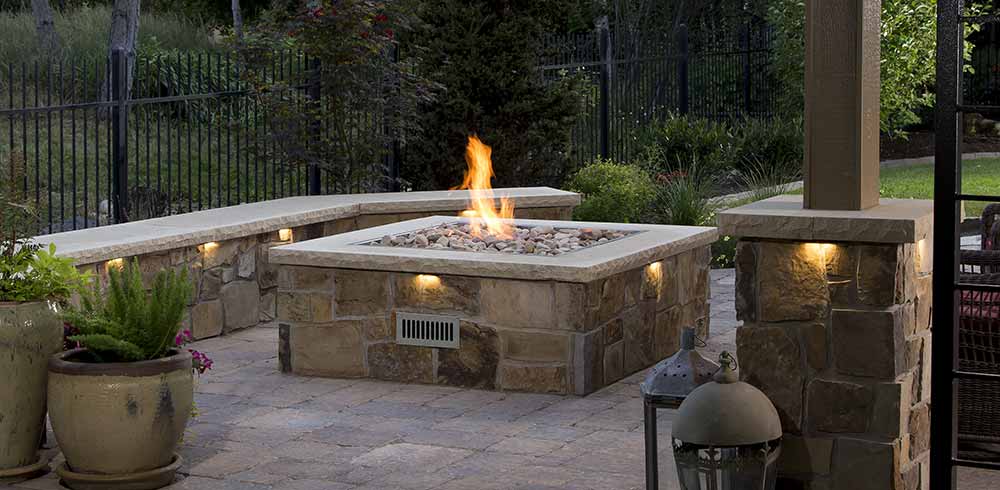
Gas fire pit performance problems are often caused by the system surrounding the appliance rather than a defective burner. Gas line sizing, available BTU capacity, operating pressure, regulator selection, enclosure ventilation, drainage, ignition wiring and fire media placement can all affect how reliably a fire feature operates.
For contractors, a structured diagnostic process can make it easier to isolate the actual cause of a problem, complete the correct repair and prevent repeat callbacks. This guide covers common gas fire pit performance issues, jobsite diagnostic steps and commissioning practices for professional installations.
Always follow the installation and operation instructions provided by the manufacturer for the specific burner, ignition system and components being used. Gas supply modifications, pressure adjustments, leak testing and other regulated work should be completed by qualified professionals in accordance with applicable codes.
Why Gas Fire Pit Callbacks Happen
A gas fire pit may appear to be a single appliance, but its performance depends on the entire installed system. A burner cannot deliver the intended flame if the fuel supply, controls, enclosure or surrounding environment do not support its requirements.
Common causes of gas fire pit callbacks include:
- Undersized gas lines
- Insufficient available BTU capacity
- Pressure loss while the burner is operating
- Incorrect or undersized regulators
- Improper natural gas or propane configuration
- Missing or incorrect propane air mixers
- Poor enclosure ventilation
- Inadequate drainage or water intrusion
- Fire media blocking burner ports or ignition components
- Incorrect ignition wiring or power supply
- Incompatible burners, valves, controls or ignition components
- Wind exposure and other site conditions
Determining whether the issue is related to installation, fuel delivery, controls, maintenance or environmental conditions is the first step toward a lasting correction.
SpotixPro Expert Insight: In our review of more than 1,800 gas fire pit support tickets, product-detail questions were the largest individual category, with roughly 450 conversations involving component selection, compatibility, sizing, or other product-specific information.
That pattern reinforces an important troubleshooting principle: confirm the specified system before assuming a component has failed. Burner, ignition, valve, regulator, fuel configuration, gas supply, electrical requirements, and related components need to be evaluated as a system. A mismatch identified during troubleshooting may point back to specification or installation rather than a defective part.
The field takeaway: Start with the exact model numbers and manufacturer documentation. Verify that the installed components match the intended fuel, required capacity, pressure and electrical requirements, and approved configuration before replacing parts.
Start With the Original Installation Specifications
Before adjusting or replacing components, verify what was actually specified and installed. Component, compatibility, and sizing questions make up the largest individual category in the gas fire pit support tickets our team reviewed, making this an important first checkpoint before treating the problem as a failed part.
Compare the installed burner, ignition system, valve, regulator, controls, fuel configuration, and related components with the manufacturer’s documentation for the exact models. The goal is to establish that the system was correctly specified and assembled before diagnosing individual component performance.
Confirm the following information:
- Fire pit, burner and ignition system manufacturer
- Model and serial numbers
- Natural gas or propane configuration
- Burner BTU rating
- Required inlet and operating pressure
- Gas line size, material and approximate total run
- Number of elbows, fittings and restrictions
- Regulator type, pressure and capacity
- Ignition and control system type
- Electrical requirements
- Required enclosure ventilation
- Required drainage provisions
- Approved fire media type and depth
- Minimum clearances and installation location requirements
Replacing parts before verifying these details can add cost without correcting the underlying problem. If the installed components do not match the required configuration, replacing a suspected component with another of the same type may simply reproduce the original issue.
Pre-Service Questions to Ask the Customer
A short intake conversation can help narrow the diagnostic path before arriving at the project site.
Ask the customer:
- Did the fire pit ever operate correctly?
- Did the problem begin suddenly or gradually?
- Is the problem constant or intermittent?
- Does it occur only during windy, cold or wet conditions?
- Does performance change when other gas appliances are operating?
- Has the propane cylinder, tank, regulator or gas supply recently been changed?
- Has fire glass, lava rock or another media recently been added or rearranged?
- Has water collected inside the enclosure?
- Have batteries or electrical components recently been replaced?
- Does the system shut down immediately or after operating for several minutes?
The answers can help distinguish between a fuel supply issue, ignition failure, environmental condition or maintenance-related problem.
Gas Fire Pit Diagnostic Order of Operations
Using the same diagnostic sequence on each service call can reduce guesswork and help ensure important system details are not overlooked.
- Confirm and reproduce the reported problem.
- Review the product specifications and installation history.
- Shut off the gas and electrical supply before completing a visual inspection.
- Inspect the gas supply system and component compatibility.
- Verify pressure and fuel delivery under operating load.
- Inspect the burner, valve, pilot and ignition components.
- Evaluate enclosure ventilation, drainage and fire media placement.
- Consider wind, weather and other environmental conditions.
- Complete corrective work and retest the system.
- Document the findings and review operation with the customer.
Gas Fire Pit Troubleshooting Chart for Contractors
| Customer Complaint | System Area to Inspect | Contractor Diagnostic Checks | Common Installation Cause |
|---|---|---|---|
| Low Flame Height | Fuel supply, gas line and regulator | Confirm the fuel source is open, verify available BTU capacity and test pressure while the burner is operating. Review line length, fittings and regulator capacity. | Undersized gas line, excessive pressure drop, insufficient meter or tank capacity, low propane level or restricted regulator |
| Burner Will Not Light | Gas supply, valve, ignition and burner | Verify fuel is reaching the appliance, confirm valve orientation, inspect ignition components and check the burner ports for debris or water. | Closed valve, air in a new gas line, incorrect wiring, improper fuel conversion, blocked burner or water intrusion |
| Delayed Ignition | Pilot, electrode, burner and media | Inspect the ignition point, spark location, pilot flame and gas path. Confirm fire media is not blocking the pilot or delaying flame travel. | Improper electrode position, buried pilot assembly, incorrect media depth or restricted burner ports |
| Fire Pit Will Not Stay Lit | Flame sensor, pilot, gas pressure and wind exposure | Confirm the flame is reaching the sensing component, inspect connections and test operating pressure. Observe whether wind is moving the flame away from the sensor. | Misaligned sensor, unstable pilot flame, pressure loss under load, poor component grounding or exposed installation |
| Uneven Flame Pattern | Burner, media and fuel distribution | Inspect for clogged ports, corrosion, trapped water and uneven media. Confirm the burner is level and installed in the correct orientation. | Blocked ports, excessive media, unlevel pan, damaged burner or debris in the gas path |
| Soot or Excessively Yellow Flame | Air-to-fuel mixture and enclosure ventilation | Verify fuel configuration, propane air mixer requirements, media placement and enclosure ventilation. Inspect for restrictions around the flame path. | Incorrect air mixer, insufficient ventilation, wrong fuel configuration or media interfering with combustion |
| Whistling Noise | Flex line, valve, regulator and gas flow | Inspect flex lines for sharp bends or compression. Verify pressure, regulator selection and component sizing. | Restricted flex line, excessive gas velocity, undersized component or incorrect pressure |
| Ignition Does Not Spark | Battery, wiring, electrode and control module | Verify power, polarity, ground and visible connections. Inspect the electrode for contamination, damage and correct spark gap according to the manufacturer. | Incorrect wiring, poor grounding, dead battery, moisture exposure or damaged ignition component |
| System Enters Ignition Lockout | Electronic ignition and flame sensing | Review the reset procedure, verify ignition sequence and inspect the pilot, sensor, wiring and fuel supply. Document any diagnostic indicator or error pattern. | Failed flame verification, unstable gas supply, wiring issue, water exposure or component incompatibility |
| Performance Drops When Other Appliances Run | Total system demand | Test the fire pit while other connected gas appliances are operating. Review meter, regulator, manifold and branch-line capacity. | Gas system sized for individual load rather than simultaneous demand |
| Propane Supply Depletes Quickly | Burner input and propane storage | Compare the burner BTU rating with tank capacity and expected run time. Inspect for leaks and verify the appliance is not operating above its specified input. | High-output burner connected to an undersized supply or customer expectations based on a lower-BTU appliance |
| Flame Goes Out in Wind | Site exposure and flame sensing | Observe prevailing wind and crosswinds through enclosure openings. Confirm media and sensing components are positioned correctly. | Exposed burner location, poor orientation, unstable pilot flame or lack of appropriate wind protection |
| Failure After Rain | Drainage, enclosure and electrical components | Inspect the pan, enclosure and ignition components for standing water, corrosion and moisture. Verify drainage paths are open. | Insufficient drainage, uncovered appliance, low-mounted controls or water collecting beneath the burner |
Diagnosing Gas Supply and Line Sizing Problems
Gas supply problems are among the most common causes of disappointing flame height and unreliable ignition. A line that appears to deliver gas may still be unable to support the appliance's full input when operating.
Verify Available BTU Capacity
Confirm that the meter, propane supply, regulator, main line and branch line can collectively support the fire pit's rated input. The calculation should include other appliances that may operate at the same time.
A fire feature may perform normally when tested alone but lose flame height or shut down when a grill, pool heater, furnace or other gas appliance begins operating.
Test Pressure Under Operating Load
Static pressure does not always reveal how the system performs when gas is flowing. Where required and permitted, a qualified professional should compare the pressure before ignition with the pressure while the burner is operating.
Significant pressure loss under load can indicate an undersized gas line, restricted component, insufficient regulator capacity or inadequate upstream supply.
Review the Complete Gas Run
Gas line calculations should account for:
- Total developed length
- Burner BTU input
- Available supply pressure
- Gas type
- Pipe material
- Fittings, elbows and valves
- Other connected appliance loads
Increasing pressure should not be used as a substitute for correctly sizing the gas system. Always use the fireplace or burner manufacturer's listed requirements and applicable fuel gas codes.
Inspect Flex Lines and Connections
Flexible connections should not be kinked, crushed, twisted or routed through sharp bends. Even when the nominal size appears sufficient, a restricted flex line can reduce flow or create unwanted noise.
Confirm that valves, connectors, regulators and other components are rated for the required gas type, pressure and BTU capacity.
Natural Gas Diagnostic Considerations
Natural gas installations can experience performance problems when the fire pit is added to an existing system without evaluating the total connected load.
Review:
- Gas meter capacity
- Main-line and branch-line sizing
- Distance from the meter to the appliance
- Pressure loss across fittings and valves
- Simultaneous operation of other appliances
- Required pressure at the fire pit inlet
If the fire pit loses flame height when another appliance turns on, the problem may be upstream of the fire feature.
Propane Diagnostic Considerations
Propane installations require additional attention to tank capacity, vaporization, regulators and combustion air.
Verify the Correct Air Mixer
Many propane burner systems require a manufacturer-specified air mixer to introduce combustion air before the gas reaches the burner. A missing, incorrect or improperly oriented air mixer may contribute to soot, poor flame appearance or unsafe operation.
Review Regulator Compatibility
Confirm that each regulator is compatible with the appliance, supply configuration and required pressure. Multiple regulators, incorrect stages or limited regulator capacity can reduce performance.
Evaluate Tank Capacity and Vaporization
A propane tank may contain fuel but still be unable to vaporize propane quickly enough to support a high-BTU fire feature, especially during cold weather or long operating periods.
Tank sizing should be based on burner demand, expected runtime, outdoor temperature and the other appliances connected to the supply.
Inspect Hoses and Portable Tank Connections
Portable propane configurations may include excess-flow devices and regulators that restrict gas after a rapid valve opening or abnormal flow condition. Follow the manufacturer's reset and connection procedures before replacing parts.
Enclosure Ventilation and Drainage
Custom fire pit enclosures must do more than support the burner pan. They must provide ventilation, manage heat and allow water to escape.
Confirm Required Ventilation
Ventilation requirements vary by manufacturer, fuel type, burner size and enclosure design. Some installations require openings at specific heights or on multiple sides of the enclosure.
Proper ventilation can help:
- Prevent trapped gas from accumulating
- Reduce heat buildup around controls and fuel components
- Support combustion and appliance cooling
- Protect ignition modules and valves from excessive temperatures
Propane is heavier than air, making lower-level ventilation particularly important where required by the manufacturer and applicable codes.
Inspect Drainage Paths
Rain, irrigation and condensation can enter the burner pan or enclosure. Standing water may corrode the burner, interfere with ignition and damage electrical components.
Verify that:
- The burner pan drains freely
- The enclosure has an appropriate path for water to escape
- Drain openings are not blocked by debris
- Controls and ignition components are protected from standing water
- The finished surface does not direct runoff into the fire pit
Fire Media Placement and Burner Performance
Improper fire media placement can create delayed ignition, uneven flames, soot and flame-sensing problems.
During inspection:
- Confirm that the media type is approved for fire-feature use.
- Verify the media depth against the manufacturer's instructions.
- Keep burner ports open where required.
- Do not bury pilot assemblies, electrodes or flame sensors.
- Prevent media from blocking gas flow between the pilot and main burner.
- Check whether media has shifted during transport, cleaning or customer use.
- Inspect for small fragments that may have entered burner openings.
Fire glass, lava rock and other decorative materials should be installed according to the instructions for the specific burner and ignition system.
Troubleshooting by Ignition System Type
The correct diagnostic process depends on how the fire pit is designed to light and monitor the flame.
Match-Light Systems
Match-light systems are mechanically simple, but their performance still depends on proper gas supply, valve operation, burner condition and lighting procedure.
Inspect:
- Manual shutoff and control valve position
- Gas flow to the burner
- Burner port condition
- Fuel configuration
- Media placement
Push-Button Spark Ignition
A push-button system may use a battery-powered igniter, piezo igniter or similar spark-producing component.
Verify:
- Battery condition and polarity
- Wire connections
- Electrode condition
- Spark location
- Correct distance between the electrode and ignition target
- Protection from moisture
Flame-Sensing Safety Systems
These systems may use a thermocouple, thermopile or another sensor to verify that a flame is present before allowing continued gas flow.
Inspect whether:
- The pilot flame properly contacts the sensor
- Wind is pulling the flame away from the sensor
- Media is interfering with the pilot flame
- Connections are clean and secure
- The pilot assembly is aligned according to the manufacturer
Electronic Ignition Systems
Electronic systems may include control modules, transformers, remote receivers, flame sensors, valves and automated restart or lockout features.
Before replacing a module, confirm:
- Correct supply voltage
- Proper polarity and grounding
- Secure wiring connections
- Compatible valve and ignition components
- Adequate fuel pressure during the ignition sequence
- Proper pilot and sensor alignment
- Protection from water and excessive heat
Use the manufacturer's diagnostic procedures and indicator codes when available.
Environmental Conditions That Affect Performance
Some gas fire pit problems only appear under specific site conditions. A unit may operate normally during a calm service visit but fail when exposed to the customer's normal environment.
Evaluate:
- Prevailing wind direction
- Crosswinds through enclosure ventilation openings
- Rooftop, balcony or exposed patio locations
- Nearby walls that create turbulence
- High elevation
- Cold-weather propane performance
- Rain and irrigation exposure
- Landscaping debris
- Coastal air and corrosion
- Movement or settling of the enclosure
Where compatible with the appliance and installation, a glass wind guard may help stabilize the flame. Wind protection should not be used to compensate for inadequate gas supply or an improperly installed ignition system.
When Components May Need Replacement
Components should be replaced when inspection confirms damage, corrosion or failure rather than as the first troubleshooting step.
A gas fire pit burner may require replacement if it is:
- Cracked or physically damaged
- Heavily corroded
- Deformed by excessive heat
- Clogged beyond appropriate cleaning
- Producing an uneven pattern after fuel and media issues have been corrected
- Incompatible with the fuel type or control system
Valves, ignition modules, electrodes, sensors and regulators should match the appliance specifications. Combining parts that were not designed or listed to operate together may create unreliable performance or unsafe conditions.
Gas Fire Pit Commissioning Checklist
Commissioning the complete system before customer handoff can reveal problems while all trades are still available to make corrections.
- Confirm the burner, ignition system and controls match the specified fuel type.
- Verify gas line sizing and available BTU capacity.
- Confirm regulator type and capacity.
- Leak-test gas connections using approved procedures.
- Verify required inlet and operating pressure according to the manufacturer.
- Test the fire pit while other major gas appliances are operating when appropriate.
- Confirm electrical voltage, polarity and grounding.
- Test the ignition sequence multiple times.
- Inspect the flame pattern across the entire burner.
- Confirm the pilot or sensor remains stable during operation.
- Arrange fire media according to the manufacturer's instructions.
- Verify enclosure ventilation.
- Verify burner-pan and enclosure drainage.
- Test timers, switches, remotes and shutoff devices.
- Observe operation under typical site conditions.
- Confirm serviceable components remain accessible.
- Photograph the completed installation.
- Record model, serial and component information.
- Review operation and maintenance with the customer.
Documenting the Installation and Service Call
Detailed records can simplify manufacturer support, warranty inquiries and future service work.
Document:
- Product manufacturer, model and serial number
- Fuel type
- Burner size and BTU rating
- Gas line material, size and approximate length
- Regulator manufacturer, model and capacity
- Ignition system type
- Control and electrical components
- Fire media type and quantity
- Enclosure ventilation configuration
- Drainage provisions
- Pressure test results where applicable
- Diagnostic steps completed
- Replacement parts installed
- Photos before and after corrective work
Records are especially valuable when multiple contractors or trades are involved in the same outdoor living project.
What to Gather Before Contacting Technical Support
Technical support can provide more useful guidance when the contractor has already collected detailed installation information.
Before contacting the manufacturer or supplier, gather:
- Model and serial number
- Fuel type
- Installation and operation manual
- Burner BTU rating
- Gas line size and estimated run length
- Regulator specifications
- Static and operating pressure information where available
- Photos of the burner, pilot and ignition components
- Photos of the valve, regulator and gas connections
- Photos of the enclosure ventilation and drainage
- Description of the failure
- Whether the issue is constant or intermittent
- Environmental conditions present when the issue occurs
- Diagnostic steps and corrective work already completed
This information can help determine whether the problem involves installation, fuel supply, environmental conditions or a specific component.
Customer Handoff and Callback Prevention
Some service calls result from improper operation rather than an installation failure. A thorough handoff can reduce customer confusion and protect the completed project.
Review the following with the customer:
- Correct startup and shutdown procedures
- Location of the manual shutoff valve
- Expected ignition sequence
- Normal flame appearance
- Fire media placement restrictions
- Wind and weather limitations
- Use of a compatible cover
- Drainage and moisture precautions
- Battery replacement procedures
- Seasonal cleaning and inspection
- Conditions that require professional service
Provide the owner with the product manual and keep a copy of the final installation documentation for future reference.
Gas Fire Pit Diagnostics FAQs
How do contractors diagnose low flame height on a gas fire pit?
Begin by verifying the burner BTU rating, fuel type, gas line size, total run and regulator capacity. Pressure should be evaluated under operating conditions because a system may show acceptable static pressure but experience significant pressure loss while gas is flowing.
Should gas pressure be checked while the fire pit is operating?
Operating pressure can provide important information about fuel delivery under load. Testing should be completed by a qualified professional using the manufacturer's specified procedures and required pressure range.
Can an undersized gas line cause ignition problems?
Yes. An undersized line can contribute to low flame height, delayed ignition, unstable pilot operation and flame dropout. The line must be sized for the burner input, total developed length, available pressure and simultaneous appliance demand.
Why does a fire pit work until another gas appliance turns on?
The total system may not have enough capacity to support all connected appliances simultaneously. The gas meter, propane supply, regulator, manifold or branch lines may need to be evaluated for combined demand.
What causes delayed ignition in a gas fire pit?
Delayed ignition may result from improper electrode or pilot positioning, blocked burner ports, excessive media, air in a new gas line, low pressure or an obstruction between the ignition point and the main burner.
How does improper ventilation affect gas fire pit performance?
Inadequate ventilation can contribute to heat buildup, poor combustion and trapped gas inside the enclosure. Ventilation requirements vary by product and fuel type, so contractors should follow the specific manufacturer's instructions.
Why does a propane fire pit produce soot?
Common causes include a missing or incorrect air mixer, inadequate ventilation, excessive media, blocked combustion air or incorrect fuel components. Verify that the entire burner system is configured for propane.
Why does an electronic ignition fire pit enter lockout?
Lockout generally means the system did not successfully ignite or verify the flame within its programmed sequence. Potential causes include low pressure, an unstable pilot, sensor alignment, wiring issues, improper grounding, water exposure or a failed component.
What should be tested before handing a fire pit over to the customer?
Contractors should verify fuel configuration, gas supply, operating pressure, ignition reliability, flame pattern, ventilation, drainage, media placement, controls and shutoff devices. The system should be tested repeatedly before the project is considered complete.
How can contractors reduce gas fire pit callbacks?
Callbacks can be reduced by selecting compatible components, sizing the fuel supply correctly, coordinating trades early, following manufacturer instructions, commissioning the complete system, documenting the installation and educating the customer on proper operation.
Build More Reliable Gas Fire Pit Installations
Reliable gas fire pit performance depends on the entire installed system. Burner input, gas line sizing, pressure, regulators, ventilation, drainage, ignition components, media placement and environmental exposure all need to work together.
By following a consistent diagnostic process and commissioning each system before customer handoff, contractors can identify installation problems earlier, reduce unnecessary part replacement and avoid repeat service calls.
SpotixPro supports contractors, builders, designers and other trade professionals with exclusive trade pricing, dedicated account support and priority order processing. Our team can also help with product selection and component compatibility for gas fire pit projects.