.jpg)
Selecting the right BTU output for a gas fire feature is not a matter of choosing the largest burner that fits. For contractors, builders, landscape professionals, and other trade professionals, burner BTU selection should be treated as a complete system-design decision.
The burner, gas supply, ignition system, fire pit opening, desired flame height, and intended use of the space all need to work together. A burner may be capable of producing 300,000 BTUs, but that rating means very little if the gas line can only support a fraction of that input.
The opposite can also create problems. An extremely high-output burner may technically work, but produce flames that are excessive for a restaurant patio, hotel gathering space, or conversation area.
The goal is not to specify the highest BTU burner possible. It is to match the burner, gas supply, ignition system, and fire feature design to the needs of the project.
In this SpotixPro guide, we'll break down how our product experts approach burner BTU selection, including typical burner-sizing ranges, gas-supply requirements, ignition limitations, commercial considerations, and what can happen when a system is improperly sized.

What Does BTU Mean for a Gas Fire Pit Burner?
BTU stands for British Thermal Unit, a measurement of heat energy. For a gas fire pit burner, the BTU rating represents the amount of fuel energy the burner or system is designed to consume under specified operating conditions.
In general, increasing fuel input gives a burner the potential to create a larger flame and greater heat output. However, BTU rating alone does not tell you exactly how a finished fire feature will look or feel.
Actual performance is also affected by:
- Burner dimensions
- Burner shape and design
- Burner port configuration
- Natural gas or propane
- Available gas pressure and volume
- Ignition system
- Control components
- Fire media
- Wind exposure
- Seating distance
- Installation conditions
That distinction becomes especially important when specifying a custom fire feature. Two burners with similar dimensions and BTU ratings can produce noticeably different flame patterns depending on how they are engineered.
Contractors comparing options should therefore evaluate the complete specifications for a gas fire pit burner rather than treating the maximum BTU number as a standalone performance rating.
Higher BTU Isn't Always Better
It's easy to assume that a higher-output burner will create a better fire feature. In practice, oversized systems can create just as many problems as undersized ones.
A few of the most important issues to consider include:
Insufficient Gas Supply
An oversized burner connected to an undersized gas supply cannot perform at its rated output. The burner may be capable of using 300,000 BTUs, but the fuel system has to be capable of delivering that volume of gas at the required pressure.
If it cannot, the result may be a smaller, weaker flame than expected.
Ignition and Flame-Sensing Problems
Insufficient gas supply becomes even more important with systems that use a pilot, flame sensor, or electronic safety controls.
A basic match-light system that is short on fuel may still operate, although flame performance can suffer. A flame-sensing system can behave differently. If the available gas supply cannot properly feed both the pilot and main burner, the pilot flame may weaken enough for the flame sensor to cool. The control system may then shut the burner down because it no longer detects a reliable flame.
This can result in cycling, nuisance shutdowns, and a fire feature that appears to have an ignition problem when the underlying issue is actually fuel delivery.
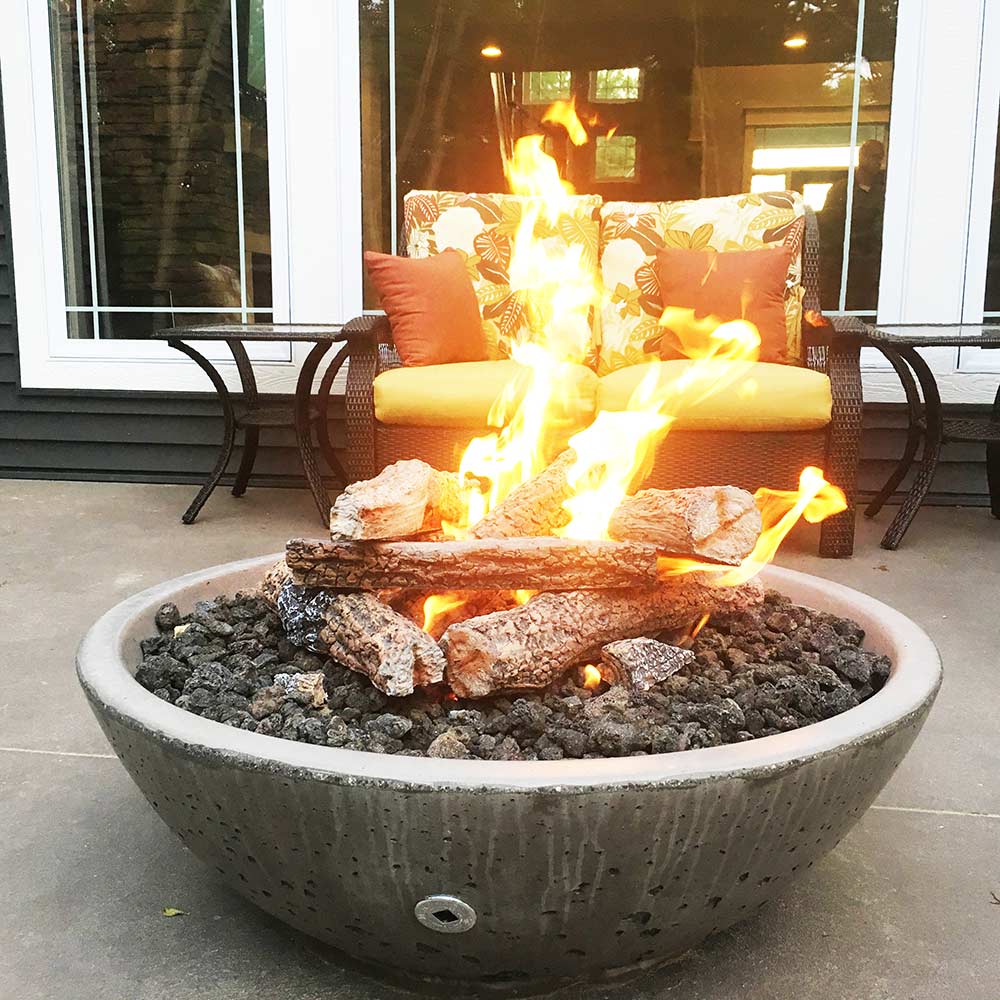
Excessive Flame Height
More flame is not appropriate for every project. Some high-output fire features are capable of producing flames several feet tall under the right operating conditions.
That may be desirable for a dramatic architectural feature, but it can make a restaurant patio, hotel lounge, multifamily courtyard, or other conversation space uncomfortable to use.
The largest burner that fits is not necessarily the best burner for the application.
Gas Supply Determines How Many BTUs Are Actually Available
One of the most important principles in burner specification is that the gas supply determines how many BTUs are available at the fire feature.
A burner rating describes what the equipment is designed to consume. It does not guarantee that the installation can provide it.
Available capacity can be affected by:
- Natural gas versus propane
- Gas pressure
- Pipe diameter
- Total developed line length
- Fittings and pressure losses
- Regulators and other system components
- Other appliances sharing the gas supply
- Required burner input
This is why the burner and gas line should not be specified independently.
On a new construction project, the required burner output should ideally be established early enough for the appropriate gas infrastructure to be incorporated into the project. On retrofit projects, contractors should determine what the existing fuel system can realistically support before promising a particular flame size or selecting high-output equipment.
For high-capacity applications, even the final connection between the supply and burner needs to be properly sized. Spotix offers fire pit flex lines and gas hoses for different system requirements, but all components in the fuel path need to be compatible with the required input.
SpotixPro Tip: Verify available gas volume, pressure, line sizing, and run length before ordering the burner whenever possible. Finding out that the gas supply is undersized after the fire feature has been built can significantly complicate the project.
Burner Size, Fire Pit Opening & Typical BTU Ranges
For custom fire feature projects, burner dimensions are typically related to the size of the fire pit opening. Burner size, in turn, influences how much fuel the system may require.
However, overall fire pit dimensions should not be used by themselves to determine BTU requirements. A large finished fire table might contain a relatively modest burner, while a custom feature with similar outside dimensions could be engineered around a substantially larger high-output burner.
For many custom installations, the burner itself is approximately 6 to 12 inches smaller than the fire pit opening, depending on burner design, manufacturer specifications, required clearances, and the desired flame presentation.
As a general planning reference, our SpotixPro product experts commonly see custom burner applications in ranges similar to the following:
| Approximate Fire Pit Opening | Typical Custom Burner Output |
|---|---|
| 18–24 Inches | 100,000–200,000 BTUs |
| 30 Inches | 200,000–250,000 BTUs |
| 36 Inches | 250,000–300,000 BTUs |
| 42–48 Inches | 300,000–400,000 BTUs |
| 60 Inches | 350,000–500,000 BTUs |
These are general planning ranges, not universal burner-sizing requirements. Actual output can vary significantly based on burner design, fuel configuration, ignition system, gas pressure, manufacturer specifications, and the intended flame characteristics.
For contractors, a better specification sequence is:
- Determine the usable fire pit opening.
- Select a burner appropriately sized for the opening and application.
- Identify the burner's required BTU input.
- Verify that the gas supply can support that input.
- Confirm that the selected ignition system is rated for the required output.
Starting with an arbitrary target BTU number and trying to build the fire feature around it can create unnecessary compatibility issues.
.jpg)
Burner Design Matters, Not Just Burner Size
Physical dimensions are only part of burner selection.
Burner shape, port configuration, construction, and gas distribution all influence flame appearance and performance. A linear burner can create a dramatically different flame presentation than a round burner, H-burner, crossfire-style burner, or other configuration even when the systems have similar total inputs.
BTU is an input specification, not a complete description of flame performance.
Two 200,000 BTU burners will not necessarily create identical flame height, flame density, coverage, or appearance. Contractors should consider how the burner distributes gas across the fire feature in addition to its rated input.
This becomes particularly important for architectural fire features where consistent flame coverage across a long opening may matter more than simply achieving the highest possible flame.
How Ignition Type Can Affect Burner BTU Selection
Ignition type is another major consideration because different systems can have very different maximum BTU capabilities.
This is one of the reasons the ignition system should be selected as part of the burner specification process rather than added after the burner has already been chosen.
Non-Certified Match-Light Systems
A basic non-certified match-light setup does not typically have an integrated safety control system imposing the same BTU limits found on certain certified ignition systems.
These systems do not arrive as a fully assembled, laboratory-tested safety system. They can be safe when designed and installed correctly, but they may not be permitted in every jurisdiction or application.
Because of those considerations, non-certified match-light systems are generally not the first choice for commercial projects where listings, certifications, automatic safety controls, or local code requirements may apply.
Certified Match-Light Systems
Certified match-light systems may have significantly lower maximum BTU ratings. Depending on the manufacturer and system, maximum input is often around 65,000 BTUs.
This can make certification requirements a major factor in burner selection. A contractor designing around a 250,000 BTU burner, for example, cannot assume that every match-light control system will support that output.
Always verify the maximum input rating for the exact components being specified.
Basic Spark Ignition
A simple spark system should not automatically be confused with a flame-sensing safety ignition system.
If the system primarily consists of a spark generator used to light the burner along with a manual key valve, without flame sensing or automatic safety controls, its BTU considerations may be similar to those of a basic non-certified match-light installation.
Battery-Powered Flame-Sensing Systems
Battery-powered flame-sensing systems add another layer of safety to the fire feature.
A typical operating sequence involves:
- A pilot flame being lit, commonly using a battery-powered spark.
- A flame sensor detecting heat from the pilot.
- The main burner being opened after the pilot has been proven.
- The safety system shutting down gas flow if sufficient pilot flame is lost.
Maximum output varies by manufacturer, but these systems commonly support approximately 175,000 to 240,000 BTUs.
That makes them a strong option for many small and standard-size fire features, including many applications with openings up to approximately 36 inches, depending on the burner and manufacturer.
Electronic Ignition Systems
Electronic ignition is commonly specified when a project requires larger burners, higher output, automatic operation, or more advanced safety and control capabilities.
Depending on the manufacturer and system, electronic ignition assemblies may incorporate:
- Outdoor-rated gas valves
- Electronic control boards
- Hot-surface or other automatic igniters
- Flame monitoring
- Automatic safety shutdown
- Remote or automation capabilities
- High-output burner compatibility
Electronic systems require an electrical supply in addition to the gas supply, so power and controls should be accounted for during project planning.
For larger fire pit openings, particularly those around 42 inches and above, SpotixPro frequently recommends considering electronic ignition or an appropriately designed non-certified match-light system when the desired burner output exceeds the capabilities of other ignition options.
Burner BTU & Ignition System Comparison
| Ignition Type | General BTU Capability | Typical Application |
|---|---|---|
| Non-Certified Match Light | High output without an integrated safety-system BTU restriction* | Large custom residential installations where permitted |
| Certified Match Light | Often limited; some systems around 65,000 BTUs | Smaller applications requiring a certified system |
| Basic Spark Ignition | Can be similar to non-certified match light when no flame sensing is present | Manually controlled residential fire features |
| Battery Flame-Sensing | Commonly approximately 175,000–240,000 BTUs depending on manufacturer | Small to standard-size fire features requiring safety controls |
| Electronic Ignition | High-output options available depending on system | Large, commercial, automated, or high-output fire features |
*Actual burner output is still limited by the burner specifications, fuel supply, pressure, gas-line capacity, applicable codes, and manufacturer requirements.
SpotixPro Tip: Never assume that an ignition category automatically tells you its maximum BTU rating. Verify the specifications for the exact ignition system and configuration being used.
Design for the Flame Experience, Not Just Maximum Output
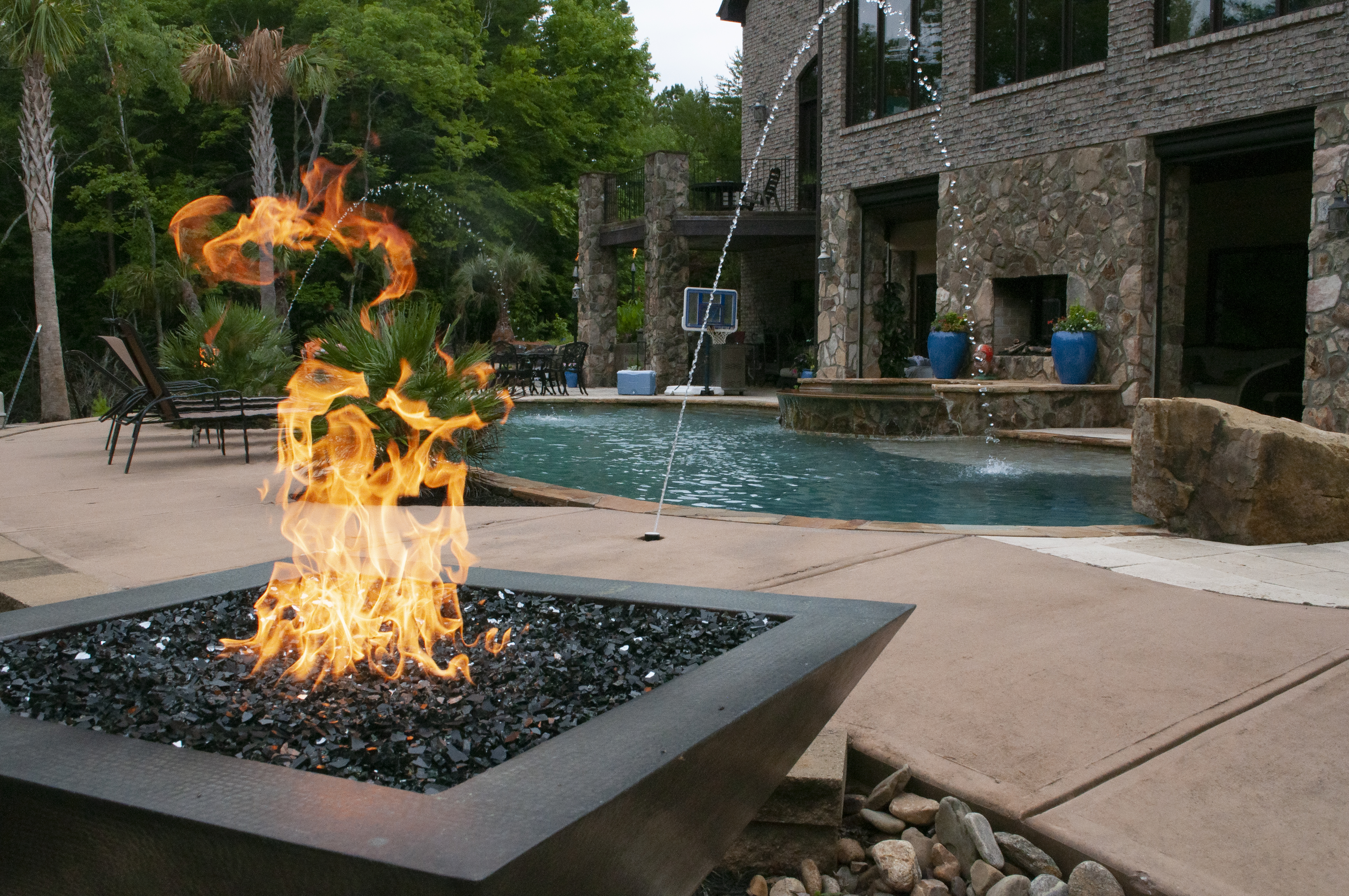
Burner selection should also reflect how the finished space is going to be used.
For some residential projects, a large, dramatic flame may be exactly what the homeowner wants. Commercial and hospitality applications often require a different approach.
Consider a fire feature installed between seating groups at a restaurant. A burner producing three-foot flames may technically fit the enclosure and operate correctly, but it can make conversation difficult and create an unnecessarily aggressive flame presentation for guests sitting nearby.
For restaurants, hotels, resorts, multifamily developments, rooftop lounges, and other shared gathering spaces, specifying a somewhat smaller burner can provide:
- Greater separation between the flame and edge of the opening
- Lower flame heights
- A more comfortable conversation environment
- More controlled visual impact
- Additional flexibility when planning seating around the feature
This is another reason contractors should avoid treating maximum BTU capacity as the target.
Residential vs. Commercial Burner BTU Selection
Two fire features with similar dimensions may need very different systems depending on where they are installed.
| Residential Considerations | Commercial & Hospitality Considerations |
|---|---|
| Homeowner's desired flame appearance | Guest comfort and shared-space use |
| Potential for larger dramatic flames | Controlled flame height around seating areas |
| Manual or automated operation | Reliable ignition and automatic safety controls |
| Simpler control requirements may be acceptable | Certification, listing, and AHJ requirements may influence equipment selection |
| Individual homeowner preferences | Operational consistency across many different users |
Commercial fire features should always be evaluated against applicable codes, manufacturer requirements, required certifications, clearances, and the requirements of the authority having jurisdiction, or AHJ.
Wind, Seating Distance & Site Conditions Matter
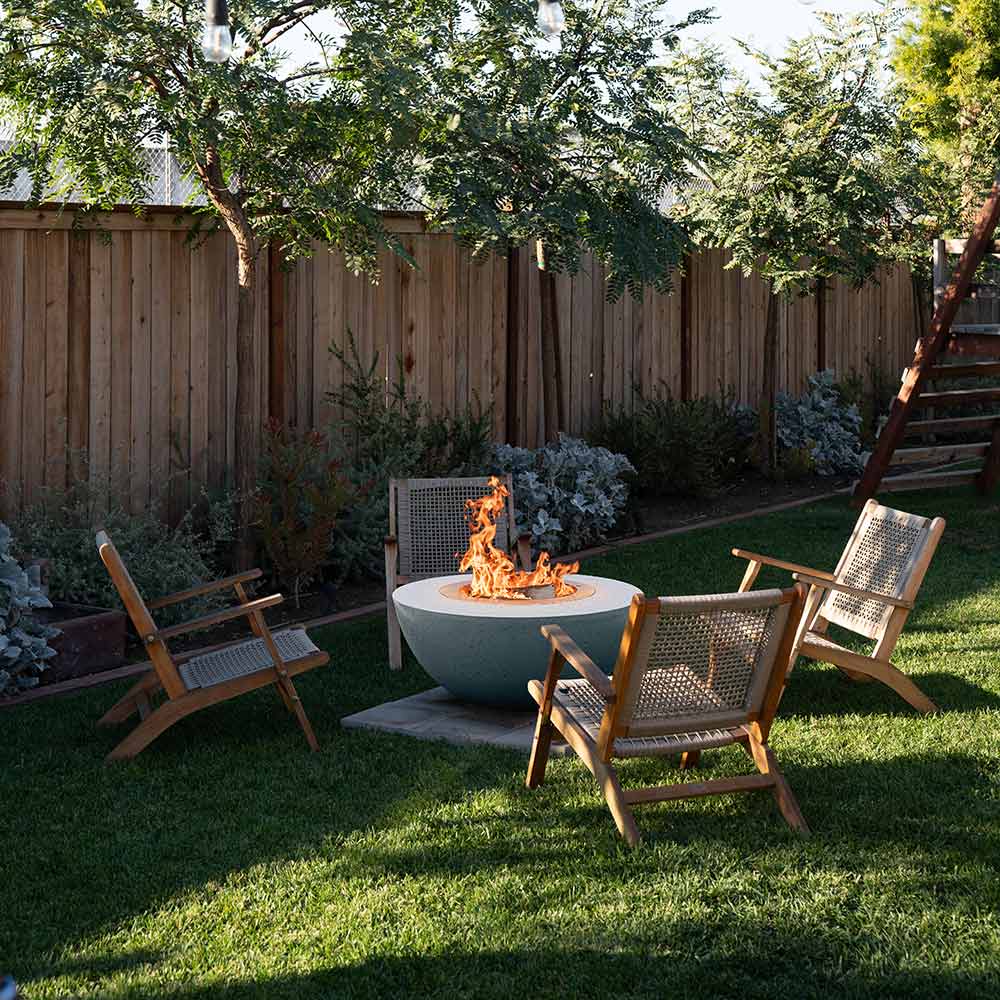
Site conditions can also change how a burner performs in the finished space.
A protected courtyard and an exposed rooftop may create very different flame experiences even with identical equipment.
Wind can push the flame away from occupants, disrupt the desired flame pattern, and affect how much warmth people actually feel. This is especially important for rooftop projects, waterfront properties, exposed restaurant patios, and other open commercial spaces.
Increasing burner BTUs should not automatically be used as the solution to a wind problem. Burner design, placement, fire feature orientation, approved wind-management accessories, and manufacturer requirements should all be evaluated first.
Seating distance matters for similar reasons. The desired output for a fire feature where guests sit close to the opening may be substantially different from one intended to create a visual focal point several feet away.
How Much Heat Does a High-BTU Fire Pit Actually Provide?
BTUs measure heat, but most gas fire pits are designed primarily as decorative outdoor fire features rather than dedicated heating appliances.
Once you move into systems around 200,000 BTUs and above, a gas fire feature can absolutely produce noticeable heat. However, the amount of warmth occupants actually experience is influenced heavily by wind direction, flame height, seating distance, and outdoor conditions.
Unlike the sustained radiant heat associated with a bed of hot wood embers, much of the usable heat from a gas fire pit comes directly from the flame itself.
If reliable outdoor heating is a primary performance requirement for the project, a dedicated patio-heating system may be a better solution than simply increasing fire pit BTUs.
SpotixPro Tip: Ask whether the client primarily wants ambiance, dramatic flame presentation, or dependable outdoor heating. Those goals can lead to very different equipment recommendations.
What Happens When the Gas Supply Is Undersized?
An undersized fuel system can present itself in several ways, and the symptoms can vary based on the ignition system.
Possible signs include:
- Smaller flames than expected
- Weak or inconsistent flame across the burner
- Poor burner performance when other gas appliances operate
- Difficulty maintaining the pilot flame
- Electronic ignition cycling
- Unexpected safety shutdowns
- Failure to achieve the burner's rated performance
On a simple manual system, inadequate supply may primarily appear as disappointing flame height. On a flame-sensing system, the same underlying gas-supply problem can cause the safety controls to repeatedly shut the system down.
That distinction is important during troubleshooting. Repeated shutdown does not automatically mean that the electronic ignition components themselves are defective.
Before replacing controls or modifying the burner, verify that the system is receiving the fuel volume and pressure required by the manufacturer.
What If the Burner Produces Too Much Flame?
If the gas supply is correctly sized and the burner produces more flame than the project requires, that is generally an easier situation to correct than discovering that the installation cannot provide enough fuel.
However, contractors should be careful about how output is reduced.
Do not assume that partially closing a key valve is the best way to permanently reduce burner output.
Restricting gas flow this way can potentially create:
- Whistling or gas-line noise
- Poor flame characteristics
- Pilot instability
- Ignition cycling
- Nuisance shutdowns on flame-sensing systems
Depending on the equipment, better solutions may include:
Specify a Smaller Burner
If moderate flame height is part of the original design goal, choosing an appropriately sized burner from the beginning is often preferable to installing a much larger burner and attempting to restrict it afterward.
Use an Appropriately Sized Orifice
In some systems, a smaller orifice can be used to limit the amount of gas delivered to the burner.
If the desired flame characteristics are known before the equipment is ordered, the manufacturer may be able to provide an appropriately configured system or fire pit kit from the start.
Use a Designed Burner Turn-Down Control
Some electronic ignition systems incorporate a burner turn-down control designed to adjust main-burner output without improperly reducing the gas supply to the entire safety and ignition system.
That distinction matters because restricting fuel to the pilot and controls along with the main burner can interfere with proper flame sensing and system operation.
Always follow the manufacturer's approved method for adjusting burner output.
Common Burner BTU Specification Mistakes
Many burner-performance problems can be avoided during the planning phase. Before finalizing equipment, watch for these common specification mistakes:
- Selecting the burner before verifying gas capacity: The fuel infrastructure needs to support the required input.
- Assuming the burner's maximum rating is what the installation will deliver: Available gas volume and pressure still control actual performance.
- Choosing the largest burner that physically fits: Burner size should reflect the desired flame experience and application.
- Using overall enclosure dimensions as the only sizing factor: Actual burner dimensions and manufacturer specifications are more meaningful.
- Ignoring ignition-system BTU limits: Some certified and flame-sensing systems have maximum inputs well below those of high-output burners.
- Assuming every match-light system has the same capabilities: Certified and non-certified systems can be very different.
- Failing to account for pilot requirements: Flame-sensing systems need adequate gas supply for both the pilot and main burner.
- Using a key valve to compensate for an oversized system: Excessive restriction can cause noise or operational problems.
- Designing for maximum flame instead of actual use: Hospitality and conversation areas may benefit from lower, more controlled flames.
- Treating a decorative gas fire feature as a dedicated heater: If dependable outdoor heat is required, evaluate dedicated heating equipment.
- Ordering equipment before verifying code requirements: Certification and ignition requirements can change which systems are appropriate for the project.
SpotixPro Burner BTU Selection Checklist
Before ordering a burner or finalizing a custom fire feature, confirm the following project information:
- Fire pit opening dimensions
- Proposed burner dimensions and configuration
- Desired flame height and appearance
- Natural gas or propane
- Available gas pressure
- Gas line diameter
- Approximate developed gas-line length
- Available BTU capacity at the appliance
- Other appliances sharing the gas supply
- Required ignition type
- Maximum BTU rating of the ignition system
- Residential or commercial application
- Required certifications or listings
- Local code and AHJ requirements
- Electrical availability for electronic ignition
- Desired control or automation functionality
- Wind exposure and installation environment
- Seating distance from the burner
- Whether ambiance, flame impact, or dependable heat is the primary project goal
The more of this information that can be established before equipment is ordered, the easier it is to match the burner, controls, and fuel system correctly.
Frequently Asked Questions About Burner BTU Selection
How Do I Determine the Right BTU Burner for a Fire Pit?
Start with the fire pit opening, desired flame characteristics, burner design, and intended application. Then identify an appropriately sized burner and its required input. Finally, verify that the gas supply and selected ignition system can support that BTU requirement. There is no universal BTU formula based solely on fire pit dimensions.
Can I Install a 300,000 BTU Burner on an Existing Gas Line?
Only if the existing gas system can provide the required fuel volume and pressure at the fire feature. Pipe size, run length, available pressure, fittings, and other connected appliances can all affect capacity. The gas system should be evaluated before a high-output burner is specified.
How Much Smaller Should the Burner Be Than the Fire Pit Opening?
For many custom fire pits, the burner is approximately 6 to 12 inches smaller than the opening. However, this is a general planning guideline rather than a universal requirement. Burner design, manufacturer requirements, clearances, and the desired flame appearance should determine the final size.
Does Electronic Ignition Require More Gas Than Match Light?
The burner itself determines much of the main gas demand, but flame-sensing and electronic systems can also depend on maintaining adequate fuel to the pilot and safety system. If the gas supply is insufficient, the pilot may become unstable and cause cycling or shutdown even when a basic manual system might continue operating with a smaller flame.
Can I Reduce Fire Pit BTUs With the Key Valve?
A key valve can provide manual flame adjustment on systems designed for it, but severely restricting the gas supply is not necessarily an appropriate way to correct an oversized system. Excessive restriction can cause gas-line noise, poor flame performance, and problems with flame-sensing systems. Depending on the equipment, a smaller burner, properly sized orifice, or manufacturer-approved turn-down control may be a better solution.
Why Does an Electronic Ignition Fire Pit Keep Shutting Off?
There are several possible causes, but inadequate fuel delivery can be one of them. If there is not enough gas to properly support both the pilot and main burner, the pilot flame can weaken, the flame sensor can cool, and the safety system may shut the burner down. Gas supply and pressure should be verified along with the ignition components when troubleshooting repeated shutdowns.
What Ignition System Should I Use for a Large Fire Pit?
For custom fire pits with openings around 42 inches or larger, higher burner output may exceed the capabilities of some certified match-light or battery flame-sensing systems. SpotixPro frequently recommends considering an appropriately rated electronic ignition system or a properly designed non-certified match-light system where permitted. The correct solution depends on required BTUs, project type, code requirements, controls, and manufacturer specifications.
Is a Higher-BTU Fire Pit Better for a Commercial Space?
Not necessarily. Restaurants, hotels, resorts, multifamily properties, and other shared spaces often benefit from lower and more controlled flame heights that allow guests to comfortably gather and talk around the fire feature. Certification, safety controls, reliability, clearances, and the intended user experience may be more important than maximum output.
Can a High-BTU Fire Pit Replace a Patio Heater?
A high-output fire feature can produce noticeable heat, particularly at outputs of 200,000 BTUs or more, but gas fire pits are primarily decorative. Wind direction, seating distance, and outdoor conditions can make usable warmth inconsistent. If reliable space heating is a primary project requirement, a dedicated outdoor heating system may be the better specification.
Specify the Complete System, Not Just the Burner
Burner BTU selection should never happen in isolation. The fire pit opening, burner dimensions and design, gas-line capacity, ignition system, site conditions, controls, and desired flame experience all influence the correct specification.
For contractors, the most important takeaway is simple: verify the fuel system before designing around a high-output burner, and choose the output that fits the application rather than automatically specifying the highest BTU option available.
This is especially important on large custom fire features and commercial projects, where a mismatch between the burner, gas supply, and ignition controls can create poor flame performance, nuisance shutdowns, and costly changes after construction is already underway.
Explore our selection of gas fire pit burners for custom residential and commercial projects. If you're working on a complex installation, Spotix product specialists can help evaluate burner sizing, ignition options, gas requirements, and compatible components before equipment is ordered.
Need help selecting the right burner, BTU output, or ignition system for your project? Contact our Spotix product experts for help comparing options, confirming compatibility, and finding the right components for your residential or commercial fire feature.