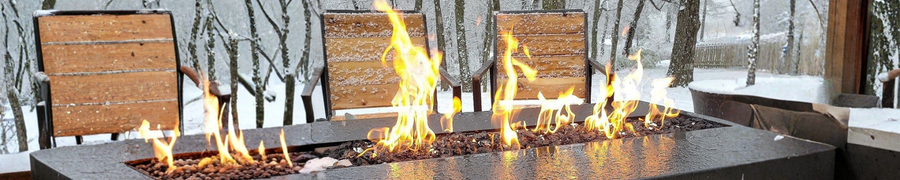
Winterizing outdoor fire features starts with selecting equipment suited to the installation environment, managing moisture and drainage, inspecting critical components, and using compatible protective accessories. For contractors and property managers, a seasonal maintenance plan helps protect gas fire pits, fire tables, outdoor fireplaces, and decorative fire features from avoidable winter damage.
Snow, ice, freezing temperatures, and repeated freeze-thaw cycles create challenges for outdoor equipment. These conditions can affect burner assemblies, ignition components, fire media, exterior finishes, and surrounding construction. Even premium outdoor fire features require proper installation and ongoing maintenance.
This SpotixPro guide covers winterizing different types of outdoor fire features, choosing durable materials and components, protecting equipment during seasonal shutdown, and maintaining installations intended for year-round use.
Why Winterization Matters for Outdoor Fire Features
Cold-weather performance depends on more than the temperature outside. Water accumulation, drainage restrictions, exposure to wind, and the construction of the fire feature all influence how an installation performs through winter.
Some of the most common concerns include:
- Trapped moisture: Water collecting in burner pans, enclosures, or around controls can contribute to corrosion and component failure.
- Freeze-thaw cycles: Water entering cracks, joints, or porous materials can expand when frozen and contribute to deterioration.
- Blocked drainage: Leaves, debris, ice, or improper construction can prevent water from leaving the enclosure.
- Ignition problems: Moisture, damaged wiring, obstructed ignition components, and deteriorated connections can affect reliable operation.
- Surface deterioration: Exposure to snow, moisture, and unsuitable cleaning or maintenance practices can damage certain exterior finishes.
For professional installations, these issues can result in additional service visits, replacement components, and unexpected maintenance costs. Addressing winter exposure during product selection and installation can help reduce those problems.
Choosing Quality Fire Feature Materials for Cold Climates
Winterization should begin before the first snowfall and, ideally, before the fire feature is installed. Contractors working in regions with significant seasonal temperature changes should evaluate construction materials, burner systems, drainage, and long-term serviceability during the specification process.
Burner Materials and Construction
Outdoor gas burners are available in different materials and configurations. Stainless steel and brass are common options for premium systems, although durability depends on the specific material grade, manufacturing quality, installation environment, and maintenance requirements.
For example, brass burners can offer corrosion resistance in exposed outdoor applications, while properly selected stainless steel components can provide durability and structural strength.
Neither material eliminates the need for drainage, cleaning, or protection from debris.
Fire Tables, Concrete, and GFRC
Concrete and glass fiber reinforced concrete (GFRC) are popular choices for outdoor fire bowls and fire tables. However, their performance in freezing conditions depends on the specific product, finish, manufacturing process, and installation.
Water that penetrates vulnerable surfaces or accumulates inside an enclosure can create problems during repeated freezing and thawing.
Contractors should review manufacturer guidance for cold-weather suitability, sealing, drainage, and surface maintenance rather than assuming every concrete or GFRC product performs identically.
Drainage, Ventilation, and Service Access
A high-quality burner cannot compensate for an enclosure that traps water or restricts required airflow.
Before finalizing a custom fire feature, confirm that:
- Water has an appropriate drainage path.
- Required ventilation openings remain unobstructed.
- Burner pans and ignition components are installed according to manufacturer requirements.
- Gas shutoffs and electrical disconnects remain accessible.
- Control boxes and serviceable components can be inspected without unnecessary demolition.
- Surrounding materials and construction are suitable for the installation environment.
For additional installation considerations, review the SpotixPro Guide to Estimating Gas Fire Pit Projects and the SpotixPro guide to hospitality fire features.
Outdoor Fire Feature Brands and Components for Cold-Weather Projects
For projects in colder climates, contractors should evaluate the complete system rather than selecting a burner or ignition component based on a single performance claim. Fuel delivery, electrical requirements, drainage, enclosure construction, controls, and manufacturer-approved operating conditions all contribute to long-term reliability.
Several manufacturers offer products worth considering for exposed outdoor installations.
Fire by Design: AWEIS Ignition Systems
Fire by Design offers outdoor fire features and its All Weather Electronic Ignition System (AWEIS), developed for demanding outdoor applications.
AWEIS is a relevant option for contractors planning automated fire features, including certain commercial installations, decorative gas torches, and custom fire pits.
When evaluating an AWEIS system, review the specific model's weather exposure requirements, ignition controls, electrical configuration, drainage provisions, and manufacturer-approved operating conditions.
For projects incorporating decorative flames, explore Fire by Design gas torches.
HPC Fire: Burner Kits and Ignition Options
HPC Fire offers gas fire pit burners, complete kits, and electronic ignition options for residential and commercial applications.
Contractors can evaluate HPC systems based on the required fuel type, ignition method, control preferences, burner configuration, and installation conditions.
For installations intended to remain operational during winter, confirm the selected system's environmental limitations and the manufacturer's maintenance requirements.
Electronic ignition systems should be evaluated as complete assemblies, including controls, wiring, valves, and protective enclosures.
Warming Trends: CROSSFIRE Brass Burners
Warming Trends manufactures CROSSFIRE brass burners for outdoor gas fire features.
The brass construction offers corrosion-resistant characteristics that make these burners worth considering for projects exposed to seasonal weather changes.
Contractors can also evaluate available burner configurations for custom fire pits and fire tables where the finished design requires a particular flame layout.
As with other premium burner systems, proper installation, compatible components, adequate drainage, and ongoing inspection remain essential.
Contractor takeaway: A premium burner or all-weather ignition system does not make the entire fire feature maintenance-free. The surrounding enclosure, drainage, controls, and protective accessories must be appropriate for the same operating environment.
Protecting Fire Features with the Right Accessories
Proper protection is one of the most practical ways to reduce unnecessary exposure during winter. Different accessories serve different purposes, and contractors should consider how they work together.
Soft Fire Pit Covers
A properly fitted soft cover helps protect the exterior and burner area from snow, rain, leaves, and other debris when the fire feature is not operating.
Choose a cover designed for the specific fire feature's dimensions, shape, material, and exposure conditions. Confirm the manufacturer's recommendations for securing the cover and managing moisture beneath it.
Loose covers can shift during high winds, while poorly fitted covers may allow water to collect or trap moisture against the surface.
Only install a cover after the appliance has been shut down and cooled completely. Never obstruct ventilation or other openings contrary to the manufacturer's instructions.
Metal Burner Covers
Rigid metal burner covers provide another layer of protection for compatible gas fire pits and fire tables.
These covers are designed to shield the burner opening and fire media from falling debris and direct precipitation. Depending on the installation, a metal cover may be used alongside a fitted exterior cover.
Contractors should verify that the cover is compatible with the burner pan and surrounding construction, and that its installation does not create drainage or ventilation problems.
Explore fire pit metal covers for available configurations.

Glass Wind Guards
Glass wind guards serve a different purpose from winter storage covers. Their primary function is to help manage wind exposure around an operating gas flame.
For certain exposed installations, a compatible wind guard can reduce flame disruption and help limit wind-related nuisance shutdowns.
Wind guards must be selected according to the burner and fire feature manufacturer's requirements, including dimensions, clearances, ventilation, and heat exposure.
A wind guard does not replace a protective winter cover and does not prevent moisture from entering the burner assembly.
Explore glass fire pit wind guards for compatible applications.
Fire Media and Removable Accessories
Fire glass, lava rock, decorative logs, and other approved fire media may require cleaning, inspection, or temporary removal depending on the installed system.
Before winter, inspect media for contamination, debris, excessive buildup, or damage. If removal is permitted, it may provide better access to the burner and drainage openings.
Some media can remain installed throughout winter when properly protected. Follow the manufacturer's guidance for the specific burner and media combination.
Browse outdoor fire pit accessories for additional protective and replacement components.
How to Winterize Gas Fire Pits and Fire Tables
Gas fire pits and fire tables require attention to the burner, fuel supply, ignition system, enclosure, and protective accessories. The exact shutdown procedure depends on the installed equipment and whether the fire feature will remain in use during winter.
1. Inspect and Clean the Burner Area
Allow the fire feature to cool completely. Remove leaves, dirt, and other loose debris from accessible areas using manufacturer-approved methods.
Inspect the burner for corrosion, damage, obstructed ports, and accumulated debris. Do not enlarge burner ports or disassemble components unless permitted by the manufacturer.

2. Inspect Drainage and Ventilation
Check burner pans, enclosure openings, and accessible drainage paths for obstructions.
Standing water can create problems for burner components and ignition assemblies. In freezing conditions, water may also expand or block drainage paths.
Never seal or cover required ventilation openings as a winterization shortcut.
3. Inspect Ignition and Control Components
Electronic ignition systems may include igniters, flame sensors, wiring, gas valves, and control modules that require protection from inappropriate moisture exposure.
Inspect accessible components for visible damage, corrosion, loose connections, and evidence of water accumulation.
Do not operate damaged equipment. Repairs and testing involving gas or electrical components should be performed by appropriately qualified personnel according to the manufacturer and applicable requirements.
4. Shut Down the Fuel Supply
For seasonal shutdown, follow the manufacturer's instructions for turning off the appliance and isolating its fuel supply.
Natural gas installations may have dedicated appliance shutoffs or additional control arrangements. Propane installations may require cylinder disconnection and separate storage procedures.
Propane cylinders must be stored according to applicable requirements and should not be placed inside buildings, garages, or other enclosed spaces.

5. Clean the Exterior and Install Protection
Clean exterior surfaces using products approved for the installed material. Concrete, GFRC, stainless steel, and coated metal surfaces may require different care.
Once the fire feature is dry and completely cool, install compatible burner covers and exterior protection according to manufacturer instructions.

Winterizing Outdoor Wood-Burning Fire Features
Wood-burning fire pits and outdoor fireplaces have different maintenance requirements from gas systems. Their primary concerns often include accumulated ash, moisture, corrosion, masonry deterioration, and chimney or venting conditions.
For wood-burning fire pits:
- Allow all fuel and embers to cool completely.
- Remove accumulated ash and debris using appropriate disposal procedures.
- Inspect the fire bowl, grate, and surrounding materials for deterioration.
- Clean surfaces according to manufacturer recommendations.
- Store removable tools and accessories where practical.
- Install compatible weather protection after the fire feature has cooled.
For outdoor wood-burning fireplaces, inspect the firebox, chimney, termination, and exposed masonry. Chimney cleaning and necessary repairs should be completed by qualified professionals.
Do not seal or modify chimney openings or required ventilation without following the appliance manufacturer's instructions.
Winterizing Outdoor Gas Fireplaces
Outdoor gas fireplaces may include burners, valves, ignition controls, glass assemblies, venting systems, and other components not found in a typical open gas fire pit.
Contractors should verify that the fireplace is approved for its outdoor installation conditions and follow the specific seasonal maintenance procedures provided by the manufacturer.
Important inspection areas include:
- Burner and pilot or ignition assemblies.
- Gas connections and accessible shutoffs.
- Electrical components and control systems.
- Drainage and water-management provisions.
- Required venting and combustion-air openings.
- Exterior panels, finishes, and approved protective accessories.
Never cover a fireplace termination, close required ventilation openings, or alter a glass assembly unless the manufacturer's instructions specifically permit that procedure.
Winter Protection for Outdoor Electric Fireplaces
Electric fireplaces require a different approach because their winterization does not involve gas burners or fuel connections.
First, confirm that the installed electric fireplace is specifically approved for outdoor use and for the environmental conditions it will experience.
For an outdoor-rated electric fireplace, review:
- Manufacturer-approved temperature and moisture exposure limits.
- Electrical connections and disconnect procedures.
- Signs of moisture entering the appliance or surrounding enclosure.
- Required airflow and ventilation openings.
- Approved cleaning and protective-cover procedures.
- Instructions for extended periods of non-use.
Do not assume that an indoor electric fireplace can be installed outdoors simply because the location is covered.
If an electric fireplace has been exposed to water beyond its approved conditions, it should be inspected by qualified personnel before operation.
Protecting Outdoor Gas Torches and Decorative Fire Features
Outdoor gas torches, fire columns, and decorative flame features may remain exposed to weather throughout the year. Their height, mounting arrangement, ignition configuration, and service access can create maintenance considerations different from those of traditional fire pits.
Contractors should inspect mounting hardware, burner openings, drainage, gas connections, and accessible ignition components according to the manufacturer's instructions.
For automated systems, verify that controls and safety functions remain appropriate for the expected operating environment.
Fire by Design's AWEIS systems are one example of ignition technology developed for exposed outdoor applications. However, contractors must still follow the specific product's operating limits, installation requirements, and maintenance procedures.
For commercial applications, document how each torch or decorative fire feature will be shut down, serviced, and returned to operation.
Can Outdoor Fire Features Operate During Winter?
Some outdoor fire features can operate during winter, provided the specific equipment is approved for the conditions and the installation remains safe and functional. Cold-weather operation should not be assumed solely because a product is marketed for outdoor use.
Contractors planning year-round installations should evaluate:
- The manufacturer's permitted operating temperature range.
- Snow and ice accumulation around the burner or appliance.
- Drainage performance during freezing and thawing.
- Wind exposure and flame stability.
- Fuel delivery and ignition requirements.
- Access to shutoffs and emergency controls.
- Inspection frequency and maintenance responsibilities.
Snow or ice should never be burned off as a substitute for manufacturer-approved inspection and cleaning. Do not operate equipment with blocked drainage, obstructed ventilation, damaged components, or suspected gas or electrical problems.
For properties operating fire features throughout winter, a recurring inspection schedule may be more appropriate than a single end-of-season shutdown.
Winter Maintenance for Commercial and Multifamily Fire Features
Commercial installations often require additional coordination because several fire features may serve the same property, and the people operating the equipment may not be the people responsible for maintenance.
Hotels, restaurants, apartment communities, and other shared-use properties should establish clear responsibilities for seasonal inspection, shutdown, and startup.
A maintenance plan should identify:
- Every installed fire feature and its location.
- The manufacturer, model, and fuel type.
- Applicable operating and shutdown instructions.
- Required inspections and maintenance intervals.
- Authorized personnel responsible for operation.
- Gas shutoff and electrical disconnect locations.
- Protective covers and accessories assigned to each unit.
- Service records and outstanding repair needs.
For multiple installations, photographs and equipment identification records can help property managers track conditions and communicate with service providers.
SpotixPro has supported projects incorporating multiple outdoor fire features, including the Black Sheep Social Club commercial fire feature installation, which included Fire by Design gas torches and HPC Fire fire pit systems.
Projects like these illustrate why equipment selection, service access, and ongoing maintenance should be considered together.
Contractor Outdoor Fire Feature Winterization Checklist
Use this checklist as a general field reference when preparing outdoor fire features for winter. Always follow the specific manufacturer's procedures and applicable requirements.
| Inspection Area | Contractor Check |
|---|---|
| Equipment | Confirm manufacturer, model, fuel type, and winter operating requirements. |
| Burner | Inspect for debris, corrosion, damage, and obstructed ports. |
| Ignition | Inspect accessible ignition and control components for moisture or damage. |
| Drainage | Verify that approved drainage paths remain unobstructed. |
| Ventilation | Confirm required openings remain clear. |
| Fuel and Power | Complete the manufacturer-approved seasonal shutdown procedure. |
| Fire Media | Inspect, clean, or store media as appropriate for the installed system. |
| Exterior | Inspect finishes, joints, masonry, and visible surface damage. |
| Accessories | Inspect wind guards, burner covers, and removable accessories. |
| Protection | Install compatible covers after shutdown and complete cooling. |
| Documentation | Record findings, photographs, repairs needed, and spring startup requirements. |
Contractor resource: Keep a copy of the completed inspection record with the project's maintenance documentation so the next technician can review the installation's condition before spring startup.
Common Winterization Mistakes Contractors Should Avoid
Many cold-weather maintenance problems begin with overlooked installation details or incomplete shutdown procedures.
- Relying on a cover to solve drainage problems: Covers reduce exposure but cannot correct an enclosure that collects water.
- Assuming outdoor-rated means maintenance-free: Outdoor equipment still requires inspection and manufacturer-approved care.
- Leaving ash or debris in place: Accumulated material can retain moisture and obstruct critical components.
- Using incompatible covers: Improper covers may trap moisture, interfere with ventilation, or damage finishes.
- Ignoring ignition components: Moisture exposure and deteriorated connections may create startup problems.
- Overlooking service access: Equipment that cannot be inspected easily can make maintenance and repairs more difficult.
- Skipping documentation: Without records, property teams may not know which units were inspected, shut down, or flagged for service.
Preparing Outdoor Fire Features for Spring Startup
Winterization should also make the next operating season easier. Before returning equipment to service, complete the manufacturer's required startup and inspection procedures.
Depending on the installed system, this may include removing protective covers, inspecting burners and fire media, checking drainage, evaluating gas or electrical connections, and testing ignition and shutdown functions.
Gas leak testing, electrical troubleshooting, and repairs must be completed by appropriately qualified personnel.
For commercial properties, record the startup inspection and confirm that the operating team understands the controls, emergency shutdown procedures, and maintenance responsibilities.
Outdoor Fire Feature Winterization FAQs
Should outdoor gas fire pits be covered during winter?
Compatible covers are generally recommended to help reduce exposure to precipitation and debris. The appropriate cover depends on the fire pit's construction and manufacturer requirements. Covers should only be installed after the appliance is completely cool and should not obstruct required ventilation or drainage.
Can a gas fire pit operate in freezing temperatures?
Some gas fire pits are suitable for cold-weather operation, but contractors must verify the manufacturer's operating limits and installation requirements. Snow, ice, blocked drainage, wind, and component condition can affect safe operation.
Are brass burners better for outdoor fire pits?
Brass offers corrosion-resistant properties that can be advantageous in exposed outdoor installations. However, burner selection should also account for design, ignition compatibility, fuel requirements, installation conditions, and maintenance. Warming Trends CROSSFIRE burners are one example of a brass burner system.
Does an all-weather ignition system eliminate winter maintenance?
No. An all-weather ignition system may be designed for demanding outdoor conditions, but the complete fire feature still requires appropriate drainage, installation, inspection, and maintenance. Follow the specific manufacturer's operating and service instructions.
Should glass wind guards remain installed during winter?
That depends on the wind guard, its mounting arrangement, and the manufacturer's instructions. Some installations may allow the guard to remain in place, while others benefit from removing and storing it. Inspect the glass and hardware before returning the fire feature to service.
Can outdoor electric fireplaces remain installed through winter?
Outdoor-rated electric fireplaces may remain installed when their manufacturer permits the expected environmental exposure. Contractors should verify temperature limits, moisture protection, electrical requirements, and any seasonal shutdown instructions.
What should property managers document during winterization?
Maintenance records should identify each fire feature, the inspection date, equipment condition, shutdown status, protective accessories, outstanding repairs, and requirements for spring startup. This is especially useful for properties with multiple installations.
Final Thoughts
Winterizing outdoor fire features is more than covering a burner at the end of the season. For contractors, reliable cold-weather performance starts with selecting appropriate materials, specifying compatible burner and ignition systems, planning for drainage and service access, and establishing practical maintenance procedures.
Premium equipment from manufacturers such as Fire by Design, HPC Fire, and Warming Trends can provide options for demanding outdoor projects, but long-term performance still depends on the complete installation and proper care.
Whether you're planning a custom residential fire pit, a commercial outdoor fireplace, or a property with multiple fire features, the SpotixPro team can help with product selection, configuration, compatible accessories, replacement components, and project support.
Not a trade member yet? Join SpotixPro to access exclusive trade pricing, product guidance, and support for your next outdoor living project.